
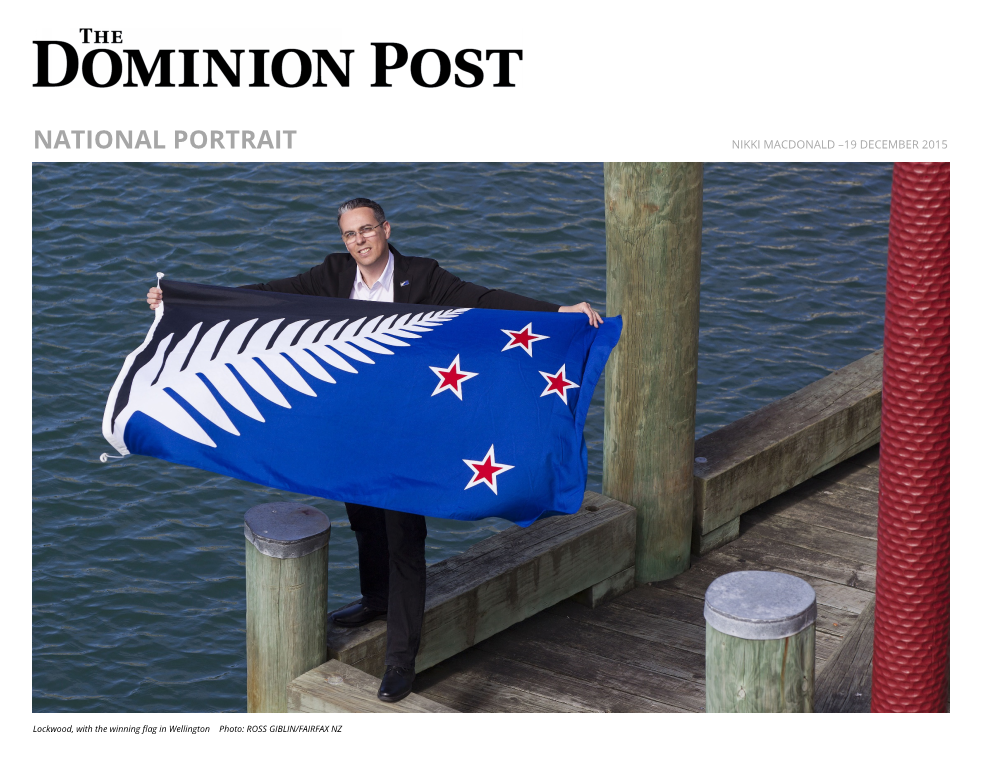
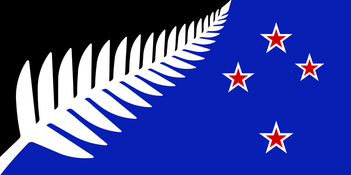
 It's hard to believe that on this day, 5 years ago, this flag was voted the Preferred Alternative New Zealand Flag! A lot of water has gone under the bridge since then, this year also happened to be the 20th-anniversary of our Silver Fern Flag — on Jan 1st 2020 who amongst us would have predicted such a highly momentous year ahead? We are now packaging up the last flag orders of 2020 in both our Wellington and Melbourne locations, and we will be on holiday until the 11th of January 2021, any orders placed between 19 Dec and 11 Jan will be shipped on the 11th of January. In the meantime, you can check out our recently-launched flag store at silverfernflag.org/store, our flag store hadn't really been updated since 2005 when our first orders started flooding in after an appearance on Campbell Live, our new Silver Fern Flag store makes ordering a lot easier, and an added bonus is postage is free for all NZ and Aussie orders over $60. 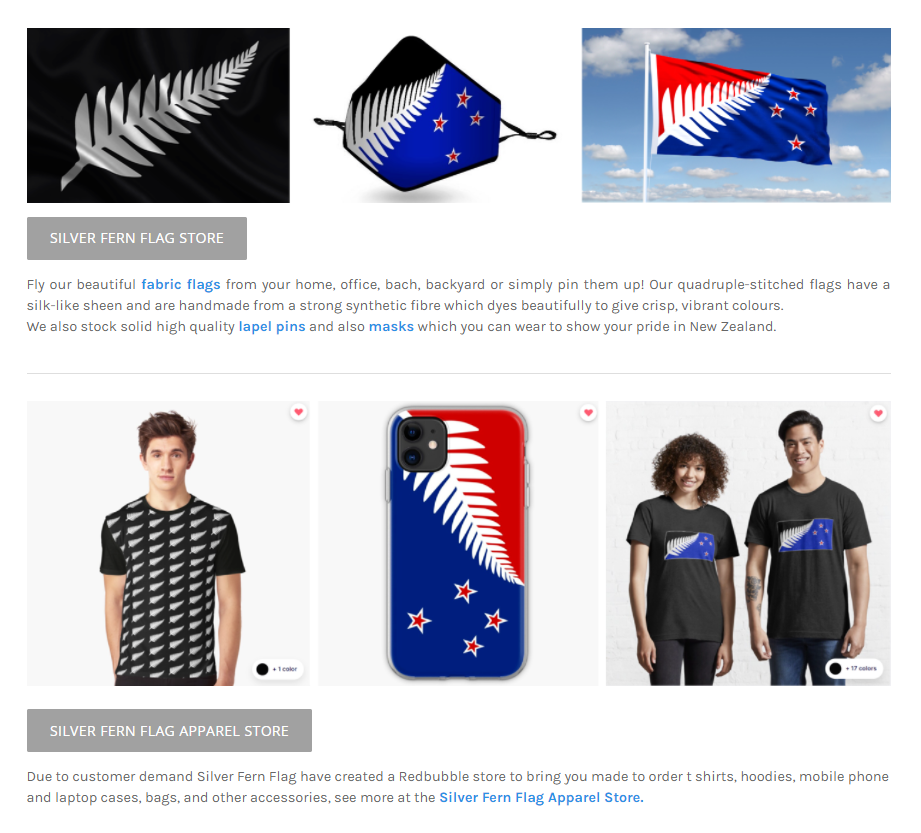 After many months of research and product testing, we have also created the Silver Fern Apparel Store by partnering with Redbubble, at this separate store, you can order items as diverse as tees and hoodies in multiple colours, bags, and mobile phone cases directly through the team at Redbubble. Having endured over 9-months of lockdowns, curfews, and restrictions in Melbourne, where I am based for work, I feel for our expatriate communities who are experiencing similar lockdowns, particularly those in the UK and the United States. Wherever you are in the world today, I hope you are able to have an enjoyable and restful holiday period, stay safe, stay well, and here's to a safe and happy 2021! 
0 Comments
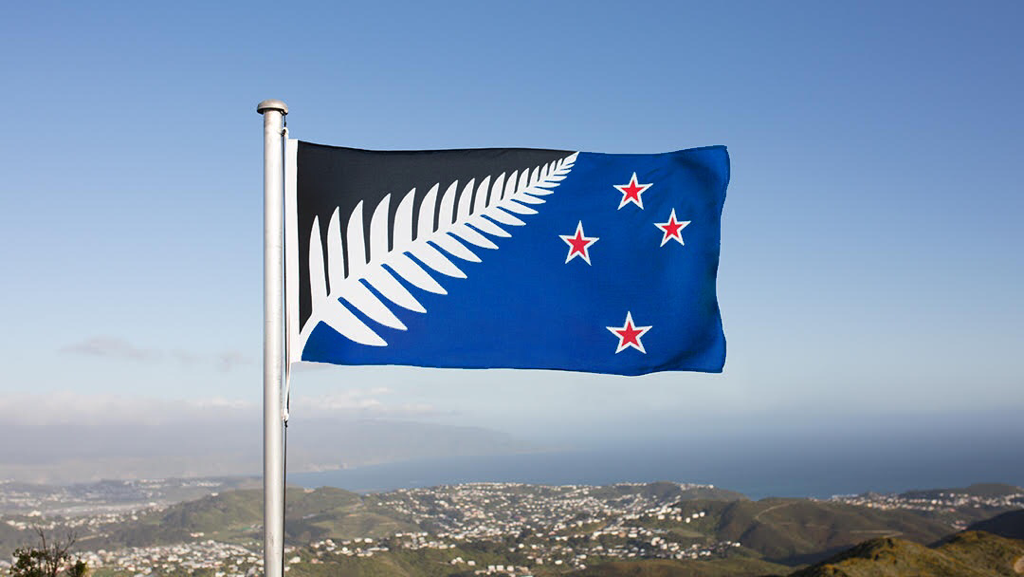 The silver fern flag, designed by Kyle Lockwood will feature at the V&A Gallery (Victoria & Albert Museum) in London.
This is one of the world’s top galleries and we are very excited that our Silver Fern Flag will be proudly on display. This major exhibition is well worth a visit if you are in London between Saturday 12 May 2018 and the 4th of November 2018. This exhibition will display emerging technologies, the ways in which they will affect our lives in the near future, and what choices we have – as citizens – to influence their development. The world of tomorrow is shaped by the designs and technologies emerging today. From smart appliances to satellites, this exhibition brings together more than 100 objects either newly released or in development that point towards where society might be headed. Although some may seem straight out of science fiction, they are all real, produced by research labs, universities, designers' studios, governments and corporations. Guided by ethical and speculative questions, we invite you to step into four scenarios – self, public, planet and afterlife – each evoking increasing scales of technological impact. How might these objects affect the way you live, learn and even love? The undeniable physical reality of these objects may give the impression that the future is already fixed. But new things contain unpredictable potentials and possibilities, often unanticipated even by their creators. It is up to us – as individuals, as citizens and even as a species – to determine what happens next. While the objects here suggest a certain future, it is not yet determined. The future we get is up to us. The future starts here. 1. Self What makes us human? We can now design life itself. Our bodies, and even our internal biological systems, are becoming sites of design. Wearable technologies and personal trackers have become standard objects of our everyday. We measure our heart rate when we go jogging, and navigate cities with the help of GPS. As we extend our cognitive and biological capacities through machines, distinctions between what is human and what is technological blur. Once synonymous with privacy and reclusion, the home is now a broadcasting station from which we share our lives through social media. We are now all connected, but are we still lonely? 2. Public Are cities still for everyone? This section explores the public realms of cities, politics and networks, the places where we come together to collectively make decisions. People get together to crowdfund everything from bicycles to bridges, or to leak governmental secrets and generate new currencies. In face of this, Does democracy still work? The future of public and civic spaces lies between two competing forces: the top-down strategies of an increasingly small number of companies and governments, and the bottom-up tactics of an increasingly large number of people. Which will thrive? 3. Planet Should the planet be a design project? Human activity has altered our planet to the extent that some scientists have declared a new geological epoch, the 'Anthropocene', or 'age of humans'. Now that we know our behaviour has unintentionally designed the Earth, can we use technology to reverse the effects? Some designers are working on possible solutions to clean, repair or give back to the planet. Others are looking beyond the Earth for solutions in the stars – designing satellites that scope asteroids for mining new geological resources, and solutions for inhabiting Mars. But if Mars is the answer, what is the question? Can we still save our planet or shall we leave? 4. Afterlife Who wants to live forever? Current advancements in biotechnology and artificial intelligence have the potential to redefine our conceptions of what life is. Reawakening after death or uploading one's mind onto a computer are ideas that may sound like science fiction but are taken seriously by some futurists today. Against these efforts to preserve the self, institutions such as the Long Now Foundation or the Svalbard Global Seed Vault are working to preserve humanity through books, seeds and material culture. What do we want to preserve for the future – the individual or the collective? See more, and to book visit; https://www.vam.ac.uk/articles/about-the-future-starts-here-exhibition 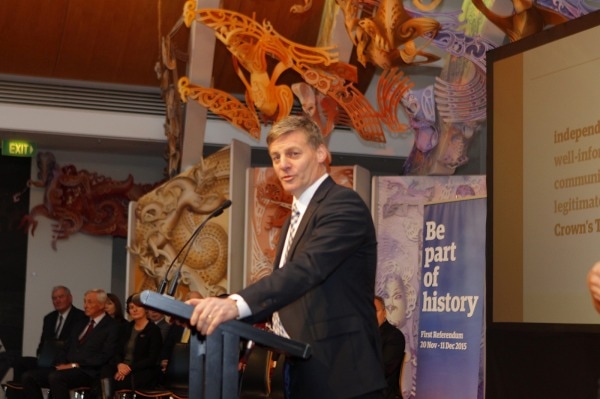  Prime Minister Bill English has revealed he voted for the flag change, but says John Key's failed referendum on this issue showed the perils of politicians rather than people trying to drive change. It is the first time English has revealed how he voted in the flag referendums. He had refused to give his view at the time because he was in charge of the referendum process. Now he is Prime Minister, English said the flag referendum showed constitutional changes such as the flag or a move toward a republic should not be led by politicians. "That is the lesson from the flag referendum. I oversaw the process for changing the flag, I voted for changing the flag. In the end, a lot of the voting became a bit of a political vehicle, probably because it was proposed by the Prime Minister. "So I think in future that constitutional change needs to come from the will of the people." 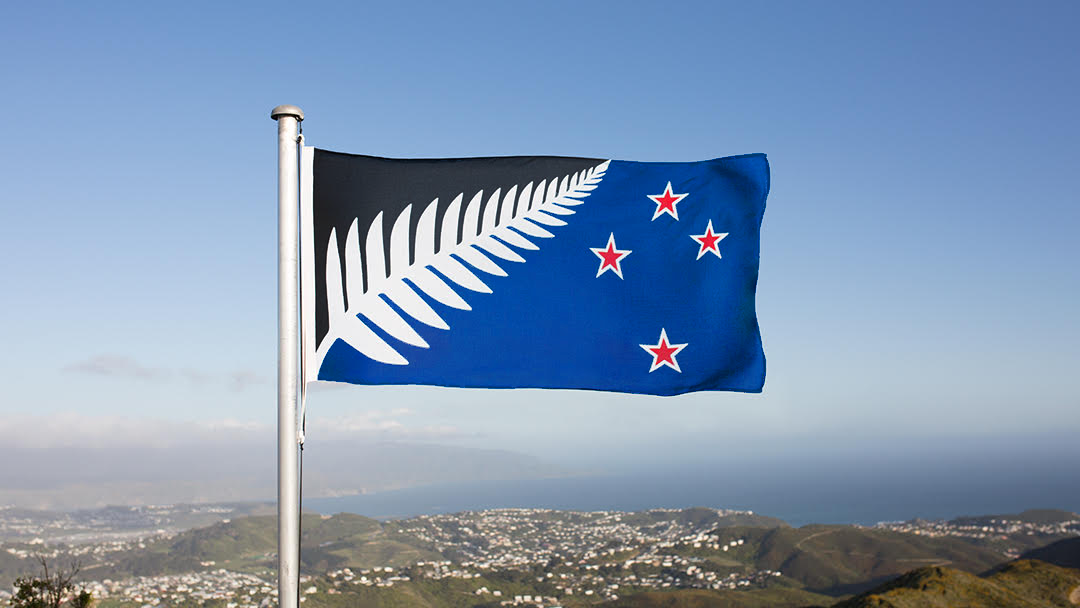 He said that would apply to any move to become a republic as well.
English was speaking to the Herald in London, where he also discussed his views on republicanism. English said he did not New Zealand to become a republic even after the reign of Queen Elizabeth. That is the time when many believe the issue will be debated in countries such as New Zealand and Australia. He believed that "people would generally support the monarchy and its continuation." Although English missed out on meeting the Queen on this trip because of her recent illness, he said he had met her in the past and hoped to do so again in his role of Prime Minister. She had also sent a Christmas card to him after he became PM. He said the monarchy was a "practical arrangement" that had worked for New Zealand and there was high respect for the Queen. He also believed the upheavals of the Brexit vote would be good for the monarchy. "I think it does [help]. Part of the strength of it has been it is a point of stability in changing times and that is particularly obvious now." He said he was a monarchist. "I support the monarchy. I've looked at the arguments for a republic, but I think in the long run it's important that important constitutional change comes from the people - so bottom up rather than top down. English has previously said he was a monarchist - although he has joked that it would be difficult to be as enthusiastic about it as Key was. Key had visited Balmoral and had several meetings with the Queen, including once promising to advocate for her in the Commonwealth for changes to the rules of succession to allow daughters to be treated the same as male heirs. Claire Trevett, NZ Herald http://m.nzherald.co.nz/nz/news/article.cfm?c_id=1&objectid=11782748 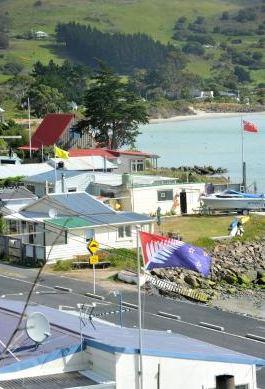  Flags fly in Harington Point, including a red version of Kyle Lockwood’s silver fern flag (foreground) and the New Zealand Red Ensign (right).
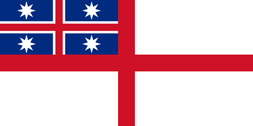
Flags, flags everywhere. Shawn McAvinue asks why so many residents in a small settlement at the northeastern end of Otago Peninsula are flying flags. Harington Point crib owner Don Shanks said the flying of flags just "evolved" in the "tight-knit community". "It’s amazing how it evolved. Everyone got on board. We didn’t have meetings about it, they just popped up." The Shanks crib on Harington Point Rd had been in the family since 1957. It was not known when the flag pole was put on the crib shed, but a photo taken of a sea lion on the beach in 1973 showed it was there then. "If it is the first one, I could not tell you." He owned nine flags. "From Hawaiian, to Scottish, to happy faces — a whole array." When someone died in the community, New Zealand flags were flown at half-mast across Harington Point. The flags were flown at half-mast when his brother Roy Shanks died in December 2015 and when his wife Moira Shanks died in May last year. The flags were also lowered when local, Matenga "Marty" Taiaroa died on a fishing boat when sailing from the West Coast to Dunedin in February last year. "The flags were lowered to half-mast in respect. It’s quite significant for the area and it means a lot to everyone." Permanent Harington Point residents Jim and Elaine Shanks — no relation to Don — said the wooden flag pole was put up on their house about 20 years ago when they built a deck. The pole was salvaged from the supporters’ club at Carisbrook and was given to the couple, who are life members. "Otherwise it would have been cut up as firewood." He believed their house was the third in Harington Point to get a flag pole. "It’s something that has proliferated over the last few years ... it’s good because it adds colour to the area." His flag collection was in tatters after being "hammered" by the wind, but his Confederation of United Tribes of New Zealand 1835 flag was in good condition. The other flag in good nick was the Speight’s flag given to him by former All Black Greg Cooper. "It’s a special possession." The Speight’s flag was hoisted only when the community needed to know a few drinks were being had inside. Harington Point crib owner Linda McLean said she and her husband Clark were flying the flag of Hungary because they recently had visitors staying from the European country. A seal sleeping on their water tank on Wednesday night was not bothered by the flapping of the tri-coloured flag. The couple owned about 15 flags. "We often have an Aussie one up because our son-in-law’s an Aussie." When the Hungarians departed, the Hungarian flag was replaced with the Dunedin flag. The McLeans bought the "wee shack" about 40 years ago and when they had added rooms on to the crib, the flag pole was moved from the back to the front. Harington Point crib owners Barry and Heather Clough said they would like to have a flag pole at their crib. "Everyone’s got one." The Dunedin couple was seeking a second-hand pole after being quoted $600 for a new one. Mrs Clough said any second-hand pole must be sturdy, preferably alloy. "Everything rusts out pretty quick," she said. The Cloughs knew once they got their pole, they would open themselves up to getting flags as presents on every occasion. "If you can’t think of something, you give them a flag." https://www.odt.co.nz/news/dunedin/settlement-shows-its-true-colours  San Jose Earthquakes and All Whites defender Kip Colvey is back home in Linkwater, the Marlborough Sounds. From the Marlborough Sounds to Major League Soccer, 2016 will go down as the year Kip Colvey stepped up to the big time, achieving his lifelong dream of becoming a professional football player. Phillip Rollo reports. After snaking through the initial bends on Queen Charlotte Drive at the foot of the Marlborough Sounds, you eventually arrive at a house peering over the glistening water with two giant flags waving in the wind and a letterbox with a Porsche painted on it. One of those flags is the Kyle Lockwood silver fern design, the alternate to the current New Zealand flag. The other is that of the San Jose Earthquakes, the Major League Soccer franchise. It's the tell tale sign that this is the home of Kip Colvey, Linkwater's professional footballer. Colvey introduces his family, starting with his mother Sue, then sister Kendall and finishes with "Kip senior", his father. Kip senior restores classic Porsches from a workshop at their home, which is just short drive from Havelock. Family has played an important part in Colvey's young career, supporting him from the early days when he shifted to Nelson to attend Nelson College before moving further south to Christchurch to join the Asia Pacific Football Academy. It seems every step he took, even as a teenager, was a step towards becoming a professional football player. "There was always a vision to move on and keep moving up, but I guess it was lucky how it all happened and having good people throughout my youth career looking after me because it all worked out in the end," he said. Colvey's family are extremely proud of what he achieved this year. The two shrines, one with his All Whites playing jersey and one with his Quakes playing jersey, perched in the lounge are evidence of that. So is the flag. The Colvey family frequently travel to watch the 22-year-old play abroad and family holidays always revolve around a game of football. That tradition started when he was a student playing for California Polytechnic State University, more commonly known as Cal Poly. Their latest trip, to the small village of Kone in New Caledonia, was to watch him represent New Zealand in a World Cup qualifier. They drove for three hours to get there from Noumea and sat in the stands alongside just a few hundred spectators. "We had booked the tickets way in advance because they were a lot cheaper ... we said we'd go and if Kip makes the squad then great, but if not we'd go and support the team anyway," Sue said. "It just worked out that Kip was in the squad." Their next trip is pencilled for Fiji in the next World Cup qualifiers, although they may decide against going as they are saving for the Confederations Cup in Russia. "We would definitely want to go to Russia so we'll have to look at the finances." Drawn against Portugal, Mexico and hosts, if Colvey is selected it will be the biggest tournament he has played at. He could be marking Cristiano Ronaldo. "It'll be fun," Colvey said with a smirk. "It's a goal of any player to play in a tournament like that, so I just have to stay healthy, put my best foot forward and I'll be there." The idea that he could play against the world's best player, proven by Ronaldo's fourth Ballon D'or, is something of fairytale for most New Zealanders. But it's entirely possible for a youngster who is already living a dream few players will ever experience. Colvey said he was "crying inside" when he was offered his first professional contract by the Quakes at the beginning of 2016, a team coached by former United States national team member Dominic Kinnear. He wanted to "play it off cool" and act like the contract was expected. The reality was actually the opposite, and the emotion was one of relief after fighting his way through pre-season to get his hands on the carrot that had been dangled in front of him. "I was fighting back the tears because it was a long time coming. It was probably one of the better moments of my life," he said. "I always thought if I kept working hard that people would notice but it's lucky that it worked out the way it did. I know a lot of kids that haven't got drafted and had to go through other ways. A few of my friends had to go through the USL and work their way through the ranks." Colvey said he dashed back to the hotel to call his family and deliver the good news. "I knew they were on edge too. It was a cool moment." Colvey was selected at No 49 in the MLS SuperDraft. Kinnear saw potential in the defender, who is capable of playing at left-back or right-back and picked him in the third round. However, players selected that deep are very rarely signed. Being drafted is effectively being placed on trial so the joy was tempered somewhat. Colvey said they call players in that position "camp fodder." "You're there to get minutes until the starters get fit and then they're playing 90 minutes in the last game and you're out, so going in it was just great to be in pre-season camp, get in that environment and see what I could do. "I kind of knew where I was standing and I knew the team needed a fullback, so that was the only real positive I could to cling on to." Colvey said the pre-season involved plenty of games, which gave him ample opportunity to showcase his talents. Eventually D-Day arrived, when the final contracts had to be signed. Colvey said was "bittersweet." "There was a group of us that got drafted together, spent a month in the hotel, and some of them got let go. It was exciting for me but it was pretty cut-throat." In his rookie year, Colvey wasn't sure when, or even if, he would make his debut. It turns out that first chance came on the opening day of the season. He was brought on against the Colorado Rapids. It was halftime. "We were out there having a kick around, having fun, as you do as a sub, and then 10 minutes into the break and the goalie coach came over and said 'there's a chance you might go on, you should probably get ready.' "I thought maybe one of the guys was feeling tight a little bit but I figured he'd probably just stay on for 10 minutes, and in my mind I thought it probably wasn't serious." Two minutes later another member of the coaching staff came over and told Colvey the instructions for defending and attacking set-piece plays. "So I was like 'oh, so I'm going in for sure?'" Colvey threw on the blue and black Adidas playing jersey and ran out with the team for the second half. San Jose scored just five minutes later, which eased his nerves, and they went on to win the game 1-0. "I was happy with the way it worked out. I was in a bit of rhythm. Going through pre-season you play all those games and if I had to wait before I played my first MLS game I would've been out of rhythm and a little bit shook." Colvey started the next two games at left-back, facing the Portland Timbers and the star-studded LA Galaxy, who visited New Zealand twice when David Beckham was on their roster. Colvey would play against the Timbers once more, his debut season ending with four appearances and a total of just 315 minutes of game time. He said it was frustrating waiting for further opportunities that never came, loaned out to San Jose's feeder side Sacramento Republic, who compete in the second-tier USL competition, at various stages throughout the season in order to get game time. "It was a week to week thing. If they wanted me I'd go on the weekend, like Thursday, but then I'd be back for training on Monday. "It's not like a six-month deal like it is in Europe and it's just a short drive." A regular day with San Jose will see Colvey and his team-mates arrive at training well before the scheduled 9am start. "You gotta be ready or you get found out," he said, hence the early arrival. He will start by jumping in the hot tub, have some food and will warm up by working out in the gymnasium. "Then we meet at 10am in the locker room, the coach will say a few words about the game, show some film, and if it's closer to another game we'll go over the other team, work out our strategy and then go over training." Then training, which lasts anywhere between 90 minutes and two hours, begins. "It's not too stressful. Earlier in the week they're harder then it tapers off like you'd expect." There's a lunch provided after practice and players recover in ice baths or spend more time in the gym before heading home. Colvey's contract is worth US$51,499.90, around NZ$72,000. He is one of the lowest-paid players in the league but that is expected considering his rookie status and the fact he came via the draft. He isn't the first New Zealander to play in the MLS and he shouldn't be the last either. Ryan Nelsen and Simon Elliott are two of the most well known All Whites to ply their trade there while others in recent years include Tony Lochhead, Dan Keat, Andrew Boyens, Michael Boxall and Jeremy Brockie. Jake Gleeson is the No 1 goalkeeper for the Portland Timbers and is the only other Kiwi that featured during the 2016 season. A former under-17 and under-23 representative, Colvey said making his full international debut for the All Whites against Fiji in their Nations Cup opener was "right up there" with the best moments of his life, of which he's had plenty in 2016. "I've played for the youth teams but just being in the full team environment, walking out and hearing the national anthem, you're representing your country at the highest level so there's no better feeling." New Zealand went on to win the Nations Cup, but it wasn't easy going, stuttering to a penalty shootout win over the hosts, Papua New Guinea. "It's very tough to play there," he said. "It's not just because of the conditions or whatever. It's just a long time to be in a hotel, people get frustrated, you're doing the same routines every day ... the pitch is terrible, the fans are against you, and there's the heat." The Nations Cup carried significant importance for New Zealand Football especially as a place at the lucrative Confederations Cup was on the line. Colvey said the players were aware that it was a win at all costs tournament. "We knew what was at stake. We talked quite a bit as a team at night before the games about what we needed to do and that we needed to perform and there were players with injuries [that were unavailable] so we were fighting for them too. "We knew if we won we'd get better games against higher-ranked opposition, which we saw against the US and Mexico, and because we were looking at the World Cup, that's our goal, so we knew the better competition would be crucial for us to prepare for that South American side." The game against the United States against Robert F. Kennedy Memorial Stadium in Washington DC was a moment Colvey really cherished. After all, he was born in Hawaii, speaks with an American accent and has lived in the country for the past five years. His San Jose team-mate, goalkeeper David Bingham, was a second half substitute. Although there wasn't any pre-game banter between the pair, he said Bingham was "pretty pissed" with the result as New Zealand secured a memorable 1-1 draw. "There's a lot of hype around that team when they play, especially in the States, and in RFK Stadium in DC. There was a lot of media attention on them so it was fun to play against them. "It was definitely a bad result for them because they got slated." The game followed on from New Zealand's 2-1 loss to Mexico, that particular international window seen as a major turning point in coach Anthony Hudson's tenure after suffering a few scares against much weaker competition at the Nations Cup and only narrowly going on to win. "We had always thought what we were doing with Anthony would work no matter who we played but there always the question of what would happen when we came up against someone that can play. "I guess the Mexico game was the point where, although we lost, we were really close to turning them over and we followed that up with the US game so we knew we could play with these people and the philosophy we have been working on for the past two years is coming together and we are just about ready." Colvey has recently signed an extension with Quakes, keeping him in the United States for at least one more season. He said he had his fingers crossed that he would be re-signed, although it was only in the past few weeks that the offer finally came his way. "When you've been in and out of the squad you never know, and you never know what's going on behind the scenes. "But I'm happy they picked up my option. I'll be back next year and I'm looking forward to it." Colvey is aware that there will be increased expectation in season two. But that's fine by him as his aim is "step it up" and break into the starting 11 on a regular basis, knowing he needs to be playing frequently for his club to continue getting opportunities with the All Whites in an important year. "I'm not a rookie anymore." Colvey will head back to California in early January, but for now he's just relaxing at home in the Marlborough Sounds, spending the next week "just laying down." "It's gorgeous. We're lucky to be here." - Stuff 
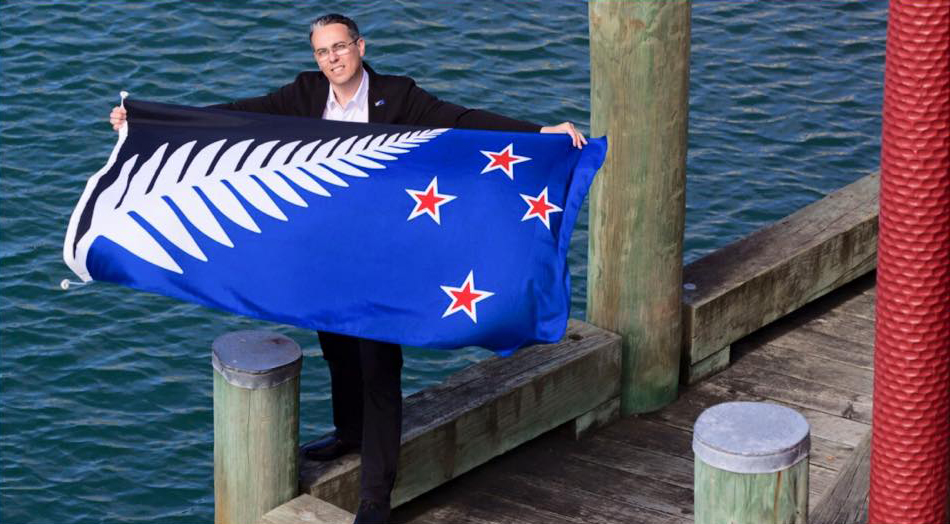 Thank you to all 921,786 voters who chose the Silver Fern flag.
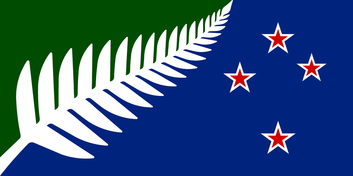
To design a flag is no mean feat – when I first did this many years ago, I didn’t imagine the day would come where it would be selected from over 10,000 designs and I would see it fly from baches, beaches, boats and buildings all over New Zealand. I am incredibly humbled by that. I am proud to be a Kiwi and thrilled to have cast my own vote in a world-first referendum process. Along the way there’s been robust and deeply passionate discussions – I remember a headline when the four alternatives were first announced “Four alternative flags, four million opinions” and that sums it up really! Irrespective of the result, nearly 1 million of you have loved the Silver Fern and I hope that you will continue to fly it. I myself will continue to wear the Silver Fern flag wherever I go, and of course I’ll be just as proud to march behind the official New Zealand flag this coming ANZAC day as I have done since 1996 when I was a volunteer in the NZ Army. Kyle Lockwood DipDArch DipArchTech MNZIOB Designer Silver Fern flag  Which flag have you voted for? Normally, I'd keep my voting private but in this instance I think you can understand that I have voted for the Silver Fern Flag design! What do you think of the polls saying the flag won't change? They are interesting of course, but the only 'poll' as such that is relevant in this process, is the referendum. 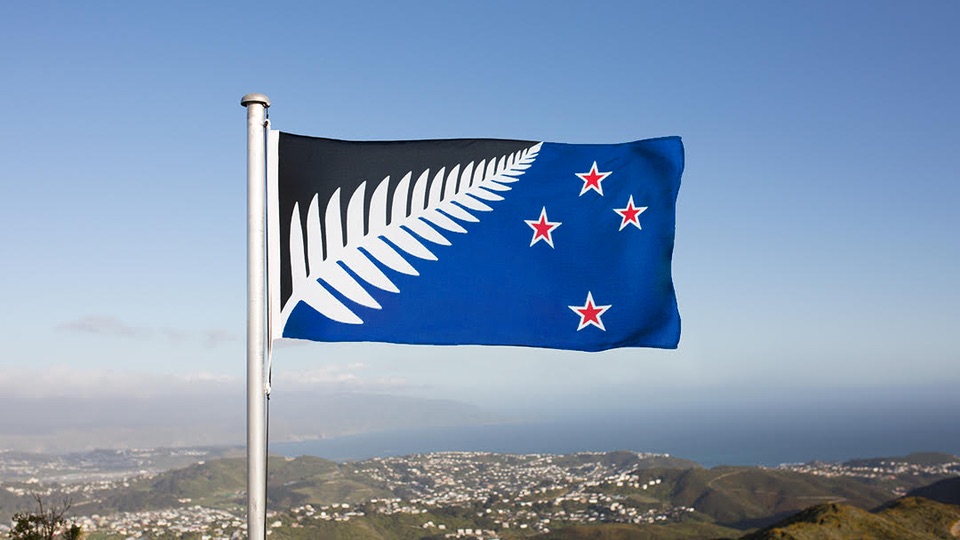 If your flag gets chosen in the referendum, does that mean you get paid? No I will not. I have assigned the rights to the Crown and would receive no payment whatsoever. What will you do with your flag if it isn't successful in the referendum? The Crown will assign the rights back to myself, There are a large number of supporters of the Silver Fern Flag, possibly over a million kiwis, and I will continue to sell the flag online through silverfernflag.org as I have done since 2006. 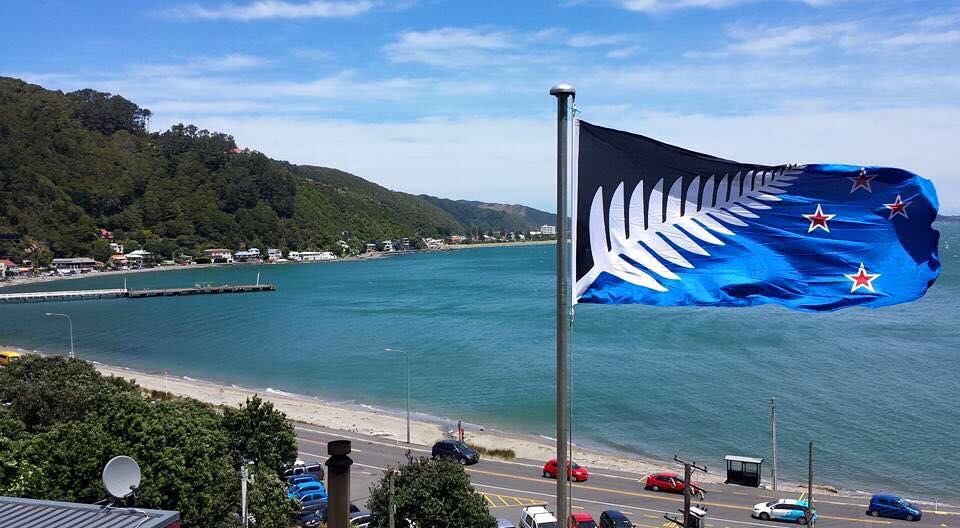 What does it feel like right now, when thinking your design could be the new NZ flag? To be honest, it's huge and a little overwhelming. My grandmother flies my flag in the Wellington wind each day, and probably the most emotional and humbling moments for me have been seeing it flown around the country everywhere on boats, beaches, baches and buildings, and seeing it flying representing New Zealand in exotic places around the world has been pretty humbling too! 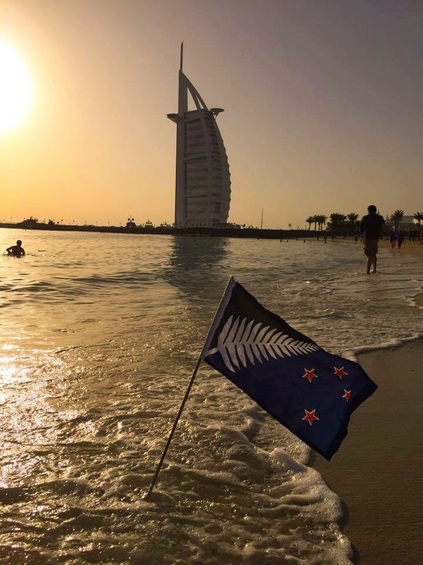 Have people recognised you? What's it been like to be in the 'public eye'? I'm just an ordinary guy and life has been as per usual for me. I've had people recognise me in the street and compliment me which was very nice of them. Have you ever met John Key? I'd never met him in my life until just a couple of weeks ago at an informal gathering where the designers from the first referendum were invited to attend by responsible minister Bill English, and acknowledged. There's been criticism of the process, your design, and even that you are not a designer, what do you think of that? I am an architectural designer with a 15-year international career in architecture, so I 'eat, breathe and sleep' design for a living. I first designed this flag 16 years ago and have since carefully refined it a number of times based on feedback from leading international vexillogists. Of course there are going to be different viewpoints for all sorts of subjective reasons. I remember a headline when the four alternatives were first announced "Four alternative flags, four million opinions" and that sums it up really! Do you think the Flag Consideration Panel could have done things differently? I don't think there's anything significant that you could do differently - they had a tough job to do. It was a robust process, and let's face it, a selection had to be made by someone! The fact that people get to vote on it in a democratic referendum process made me pretty proud to be a Kiwi! Change the NZ Flag, along with many high-profile New Zealanders have been promoting your flag, what's your involvement in that? I'm not part of that organisation or have any financial part in it. Of course, I'm very humbled by the many people who have shown support for the Silver Fern flag, and I thank them immensely for their passion and enthusiasm! 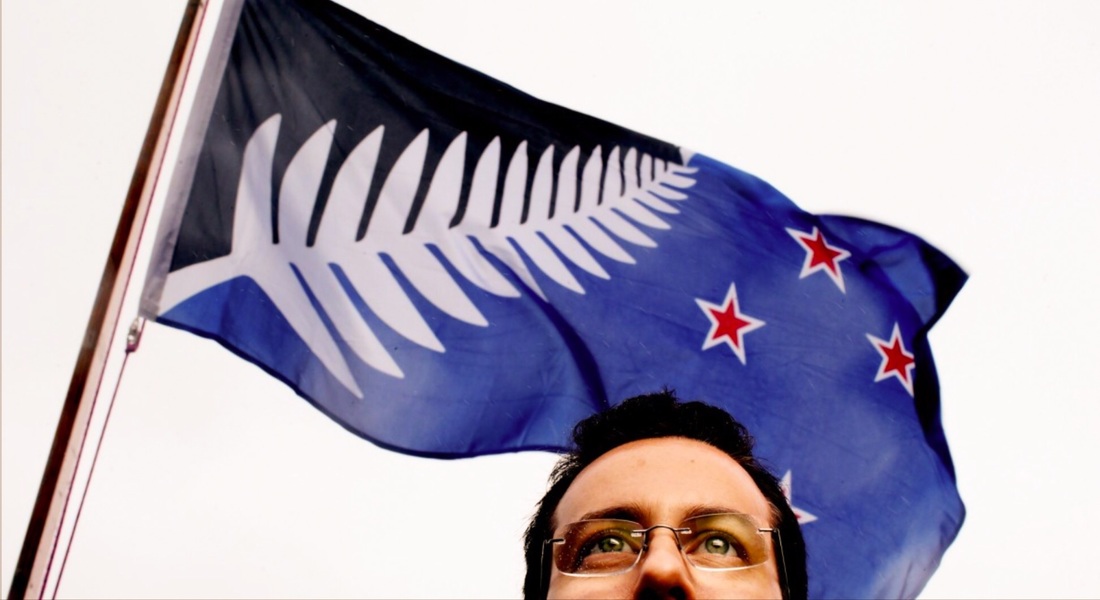 What's next for you? You've bought back the 10-year passport, you have designed what could be New Zealand's next flag, will you be writing a new national anthem for New Zealand?
I'm a designer, and definitely not a songwriter! I tend to campaign for matters that I am passionate about, and that I feel are beneficial to Kiwis both in New Zealand, and overseas! silverfernflag.org  Lieutenant Colonel (Rtd) Chris Mullane, ONZM, MBE President of his local RSA, talking about fighting for our country and this historic flag vote. "We fought for democracy" Please watch and share this video, vote, and post your ballot as soon as you can! Thank you!
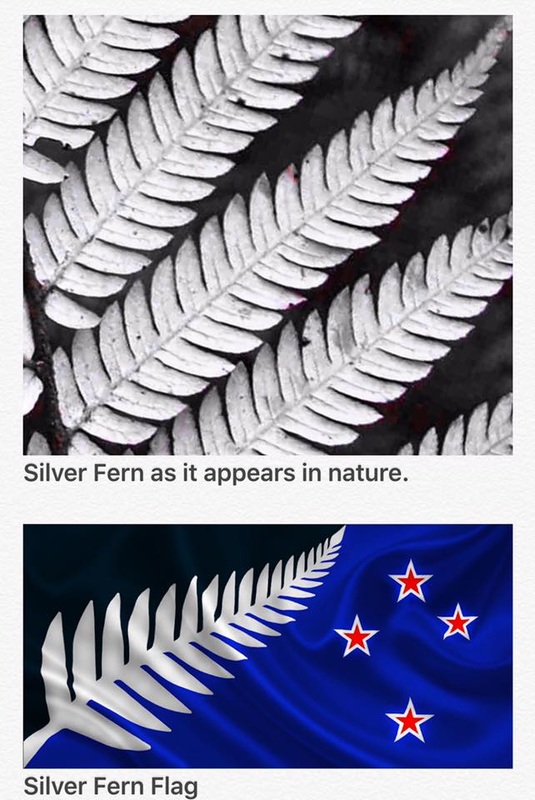
There's been a few questions lately about the appearance of the fern on the Silver Fern Flag. It was decided early in the design phase to stylise the silver fern on the flag, just as the Canadian flag has a stylised maple leaf, the reason for stylisation is so the fern-leaf on the flag looks right when it's aloft in the breeze. We've also been asked why isn't the fern silver? In flag design convention, there are 5 official colours and 2 official metals, design rules stipulate that a colour must be separated by a metal. Silver is represented in white just as gold is represented in yellow, have a look at the graphic below; 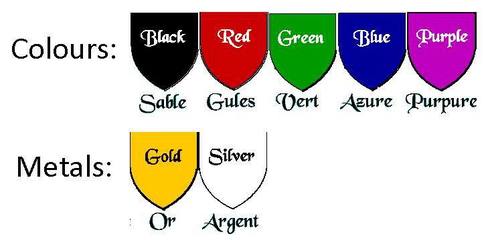
 As a current serviceman deployed abroad I am watching (and voting) from afar and through my own poll with the numerous other nationalities I am currently working alongside, the silver fern is by far the one they can easily identify NZ with. Not only is the silver fern adorned on the NZ headstones in the numerous war graves around Europe, but also prominent on the current NZ Army and NZ Defence Force (NZDF) branding.
That said the flag is for all of NZ, not just the military. By applying the military appreciation process ‘Observe, Orientate, Decide, and Act’ an informed decision can be realised without political or organisational interference and bias so the action taken on the voting paper is an individual’s choice. Through this referendum we have a chance to make history and provide a NZ identity for our grand and great grandchildren to rally under, rather than living in the past. As a serving member of the NZDF I remain loyal to the NZ Flag of the day, it is my hope that come the 24th March 2016 we can march proudly into a future under a flag that is uniquely distinguishable and recognisable of NZ advancing, and not, marking time. *Tim (*Name changed to protect the identity of the author currently deployed abroad on active service) 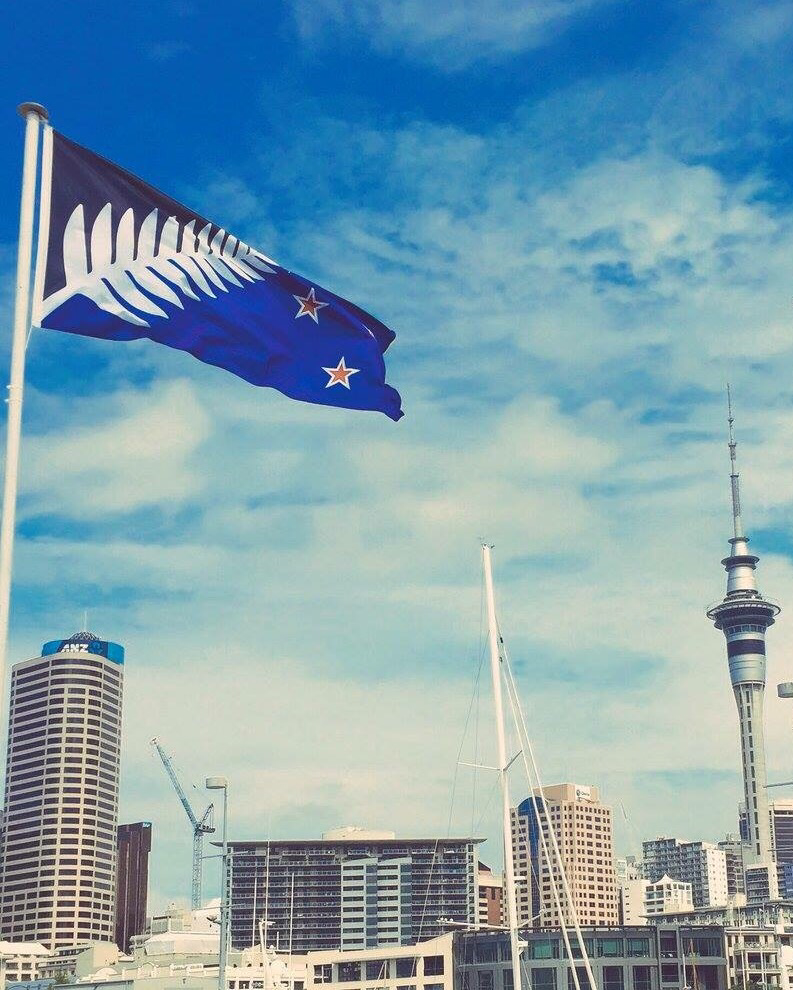 Two years ago I welcomed John Key’s promise to hold a flag referendum. At last we could get rid of the Union Jack from our flag and have one that didn’t look like Australia’s. Many on the left had long argued for a flag change and now we had some significant support from the right.
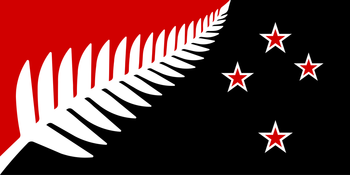
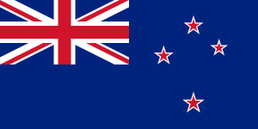
Now it seems that many leftists will be joining the Anglophiles in voting to keep our present colonial flag. Let’s look at the reasons they give for changing their stance and the counter-arguments. 1. The referendum is a waste of taxpayers’ money. That is essentially an argument for never having a referendum, because it will always cost money. However, I do accept that some of the early expenditure – to find out about our “values” – was unnecessary. 2. Changing the flag isn’t a priority. Obviously, combating the TPPA or dealing with the housing crisis are more urgent issues, but it is not a zero sum game. Changing the flag is about us developing a greater sense of nationhood, which has progressive ramifications across other political issues. The Union Jack in our flag symbolises a neo-colonial mentality which is still present, even if the imperial power we now tip our hat to is usually the United States. A greater sense of independence would mean we’d be less trusting of America over the TPPA or New Zealand’s participation in America’s wars. Be careful about using the “it isn’t a priority” argument. It’s regularly used by politicians to avoid dealing with controversial issues: like marijuana law reform, assisted dying legislation and improving the abortion laws. 3. Changing the flag is a diversion. I find that argument a bit patronising to New Zealanders. We are grown up enough to engage with the flag issue, or not, as we wish. We are only diverted to the extent we want to be diverted. And there are some important underlying political issues in the flag debate, as I have explained above. 4. Who cares about the flag anyhow? Isn’t flag-waving a reactionary nationalist exercise? I have considerable sympathy for that stance, particularly when you see how patriotism and flag-waving is used by the political right in America, Britain, Australia, France, etc. But if we are going to wave a flag at to wave at international sports events, etc., I prefer it wasn’t our present colonial flag. 5. It’s John Key’s flag. John Key was still a money-trader when Kyle Lockwood designed the flag back in 2001. Before John Key got involved there were many people (including myself) campaigning for a flag change – many of whom liked the Lockwood design. It won flag design competitions. 6. The Lockwood design is too bad to vote for. Fair enough if you really don’t like it don’t vote for it. People differ on what is a good design and a lot of people will disagree with any design chosen. Given the way symbols have been used in New Zealand in recent years the most popular flag was always going to have either a fern or a koru on it, and perhaps a southern cross. Kyle Lockwood’s design won because it combined two of these symbols and for traditionalists it didn’t depart too much from the original flag, with a southern cross on a blue background. 7. The process to select an alternative flag was just so bad. True, the selection committee was weak on design expertise. It should have done some development work on the best, or most popular, designs. Also, the process of selecting the final four designs for the initial referendum was clearly flawed. Two of the final four designs (the black and white koru and fern ones) were duds. Better and more popular designs, like the modified Hundertwasser koru or Otis Frizzell’s koru and stars, could have been in the final four. 8. We can have another go at changing the flag at a future time (perhaps when John Key has gone). The truth is that you’ve got to seize chances to bring about progressive change as they arise. Really, which party is going to start another referendum process any time soon? Labour?? 9. The campaign for the fern flag is a John Key, National Party, business leaders and elite sportspeople campaign. To me the first rule of politics is that you judge an issue on whether it is progressive or not, rather than who is supporting it. It is good if some on the right support a progressive issue. National Party supporters like Dan Carter might have been more in the media, but the Change the New Zealand Flag campaign also includes a lot of people not aligned to National, like Roger Hall and Oscar Knightly. International sportspeople like Silver Fern Maria Tutaia have good reasons to support a flag change, particularly when the Aussie and NZ flags get mixed up at international events. And we shouldn’t be against business people wanting a more distinctive New Zealand branding. 10. A defeat for the fern flag will be a defeat for John Key. I’m afraid the opposite is true. Of course, John Key has too closely identified himself with the fern flag design. But if people who want a flag change for good and genuine reasons see Labour and the left responsible for keeping the colonial flag then the only political victor, unfortunately, will be John Key and his National Party. Keith Locke. - See more at: http://thedailyblog.co.nz/2016/03/01/odd-alignments-in-the-flag-debate/#.dpuf 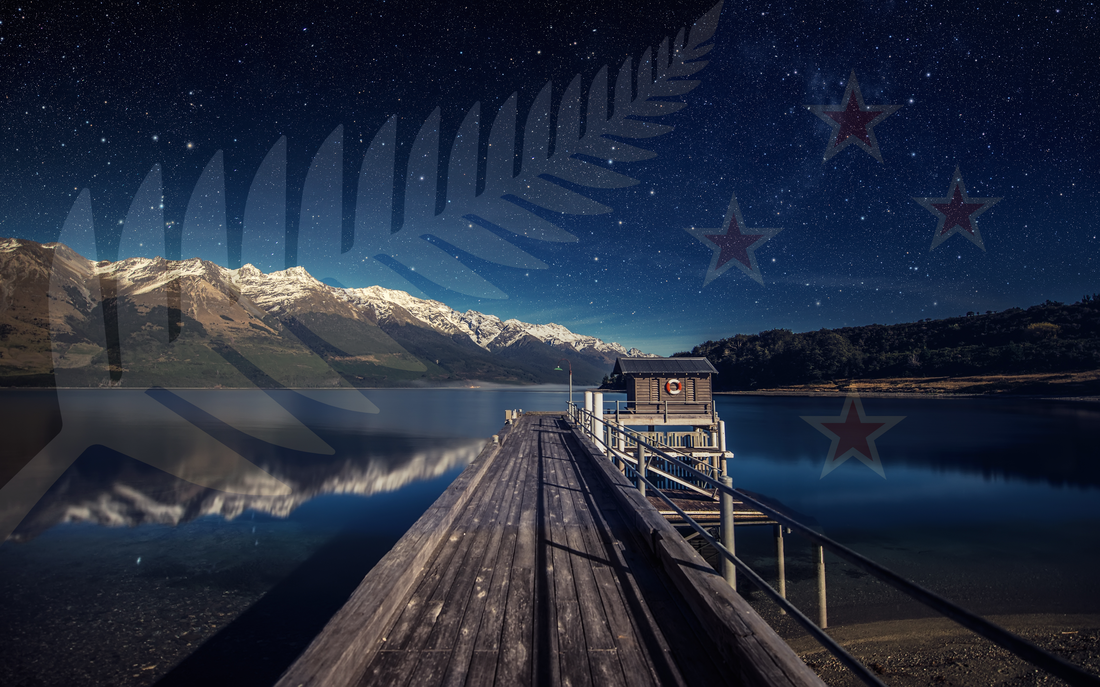
There are quite a few myths and legends surrounding the New Zealand Flag. Massey University Senior Research Historian Malcolm Mulholland has published an excellent book of facts about flags in New Zealand, the book is an interesting look into not only flags but also touches on New Zealand's history as a whole - download his book below, even if you're for or against a new flag for NZ, you'll be fully informed before you vote in March, it's definitely well worth the read!

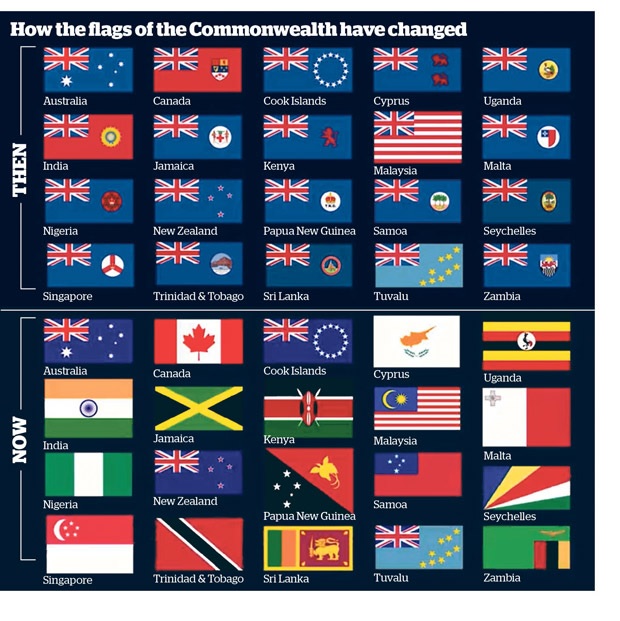 NZ FLAG FACT NUMBER 30
Fifty-three independent nations belong to the British Commonwealth. Four of these countries have never had the Union Jack on their flag, forty-four have removed the Union Jack from their flags, and Fiji is in the process of changing its flag, which will take the number to forty-five. No former British colony from Africa, Asia, the Caribbean or the Americas has the Union Jack on their flag any longer. The vast majority of British Commonwealth countries changed their flag during the 1960s when Britain attempted to join the EEC in order to secure trade benefits (France twice blocked Britain’s efforts in this regard). In 1973 the EEC finally accepted Britain as a member, after which New Zealand exports to the United Kingdom dropped dramatically. ‘There was no shadow of a doubt that the British application of 1961 [to join the EEC] presented a threat to New Zealand trade of the gravest dimensions. Prime Minister Holyoake summed it up when he said that the bid to join “raises questions probably the most serious New Zealand has had to face in times of peace”. However, despite calls from various New Zealanders to have the Union Jack erased from the New Zealand flag, this symbol has continued to feature on it. The only other independent Commonwealth Countries that still have the Union Jack on their national flags are Australia and Tuvalu, which, like New Zealand, are countries located in the Pacific Ocean. From New Zealand Flag Facts by historian Malcolm Mulholland. Read more at: http://www.silverfernflag.org/press/new-zealand-flag-facts-book
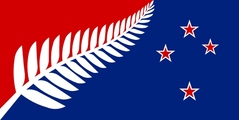 We've written to the Prime Minister and the Leader of the Opposition as they would both like to see a silver fern appear on New Zealand's national flag. Our letter to the prime minister can be viewed below. We'll keep you posted as to his response.
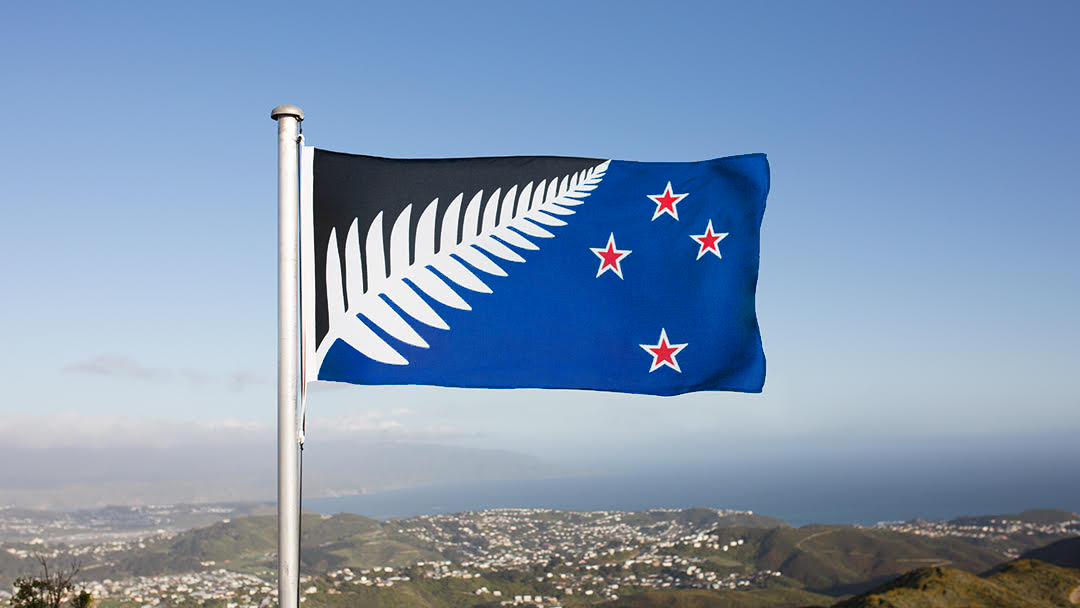
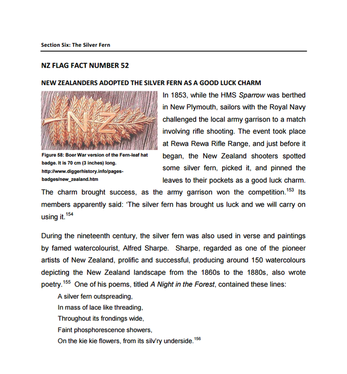
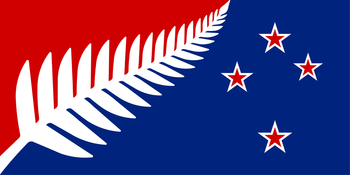
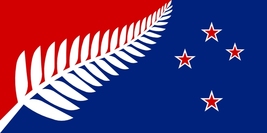
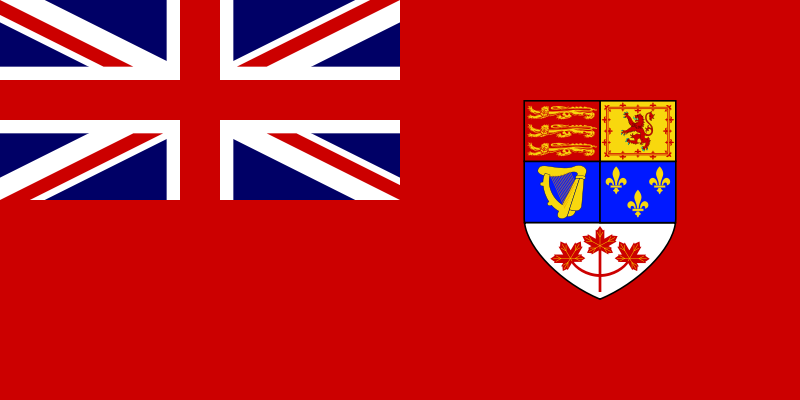
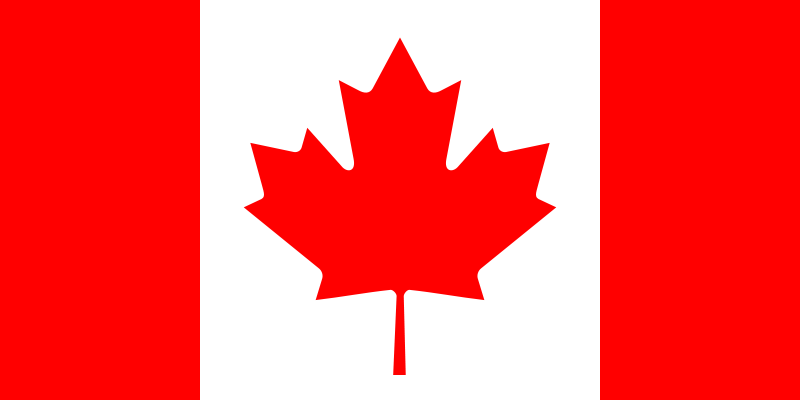
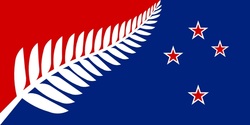 Please Share! silverfernflag.co.nz Newstalk ZB Media Statement. Hello Chris, thank you for approaching me and asking about a flag I designed for New Zealand. The flag was designed when I was a Massey University student in 2000, features a bold silver fern on the left hand side, and the Southern Cross to the right, the colours honour the red, white and blue colours seen on the present flag. If you are near a computer or a smart phone, the design can be viewed at www.silverfernflag.co.nz. A stylised Silver Fern, a New Zealand icon for well over 100 years, has been worn proudly by many generations of New Zealanders, from sports people, to firefighters and military personnel, The Silver Fern is an element of indigenous flora representing the growth of our nation. The multiple points of the fern leaf represents Aotearoa's peaceful multicultural society, a single fern leaf spreading upwards represents that we are all New Zealanders - one people - growing onward into the future. The Southern Cross, is a defining element in the present New Zealand Flag, it represents our geographic location in the antipodes. The Southern Cross is visible throughout the year in the southern night skies. It has been used as a navigational aid for centuries and it helped guide early settlers to our islands. Each star is also representative of the major island groups of New Zealand - North Island, South Island, Stewart Island, and the Chatham Islands. Red, is a significant colour to the NZ Maori, Red also represents the sacrifice made by all New Zealanders during wartime. White represents Aotearoa, Land of the Long White Cloud, The official Maori name for New Zealand. The colour also represents peace. Blue represents aumoana or the ocean that surrounds our island nation, over which all New Zealanders, or their ancestors, crossed to get to New Zealand. Rugby is not credited with the first wearing of the silver fern, according to Nelson historian Alan Turley. He said that while records were scant, an historic magazine cutting given to him by rugby commentator Keith Quinn, showed the fern being worn in a shooting, not rugby, match between New Plymouth's army garrison and the visiting Royal Navy. It was 1853, and the Royal Navy ship HMS Sparrow was anchored offshore in a visit to the fledgling town. While onshore, the navy men challenged the local army lads to a rifle shooting match at the Rewarewa rifle range. According to the clipping, the army men decided to pick silver fern tips growing near the range and pin them to their uniform shirt pockets as a sort of good luck talisman. The team won the shooting match and thereafter considered the fern a good-luck symbol, and so the tradition of the silver fern began. I appreciate that people fought wars under our present union-jack based flag, but what is lesser known is that soldiers, who made the ultimate sacrifice for New Zealand, lie buried in foreign fields beneath headstones bearing not the Union Jack, but the Silver Fern. Also the badges of many NZ army regiments feature the silver fern. Our Canadian commonwealth brothers-in-arms also had troops who fought under a British Red Ensign based flag, but in 1965 they changed their flag to the distinctive Maple Leaf Flag which we today associate with all things Canadian, however on remembrance days, the old flag is sometimes brought out and displayed too. If New Zealand changes its flag in the future I hope that on ANZAC and remembrance days we could honour our past soldiers in the same way as the Canadians do today. Both the Prime Minister and the Leader of the Opposition, are supporters of the Silver Fern. The fern is our icon, it's not just about the All-Blacks, it was on our one cent coins, it is now on our $1 coins too, and it features on our banknotes. It's been on our coat of arms since 1956, and lately it has become the official symbol of the NZ government abroad. It's now being painted on Air New Zealand's aircraft, and like Canada's maple leaf, the fern is a powerful symbol that says 'New Zealand'. It even features strongly on our passports. Speaking of passports I'm presently spokesman for a group called nzten.com, we are advocating for the return of ten year NZ passports. Amongst our 11,000 supporters are a few Knights and Dames, and the Hon Phil Goff. I believe that one day New Zealand will choose a new flag, the present flag suggests we are a subservient colony of the United Kingdom, not the proud independent nation of New Zealand that we have been, since the passing of the Statute of Westminster Adoption Act in 1947. I believe my design honours our past, but also looks forward to our future. Flag change could be 25 years away, but I hope that whichever design is chosen, it is done democratically, and that design chosen represents all New Zealanders. Kyle Lockwood. Melbourne, 12th August 2013. ENDS Chris Lynch <[email protected]> 11 August 2013.
Hi there, Kyle I host NewstalkZB's Canterbury Mornings programme (on New Zealand's second biggest radio market) We are discussing "changing the New Zealand flag" on the programme tomorrow Monday. We're on 100.1FM and streaming live at NewstalkZB.co.nz. I'm keen to get people's input on this issue and welcoming calls in from the public on (03) 340 10 98 or toll-free (inside the Canterbury region) on 0800 80 10 80. Talkback starts at 8.40AM. You're more than welcome to call in and please spread the word!! Best Wishes, Chris Lynch Chris Lynch Host Canterbury Mornings with Chris Lynch E: [email protected] W: newstalkzb.co.nz F: facebook.com/canterburymornings F: facebook.com/lynchinnz T: lynchonzb  Our silver fern flag featured in the NZ Herald yesterday. (Albeit the prototype version) A bill on the status of the NZ flag is expected to be drawn by parliament in the near future. Check out the article here at http://m.nzherald.co.nz/nz/news/article.cfm?c_id=1&objectid=10863680
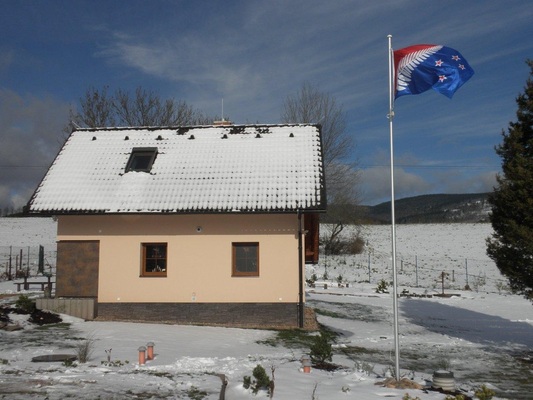 Whilst we in the southern hemisphere are looking forward to warm beachy summers, the first snows are falling in the Czech Republic....
"We love your flag, white, blue and red are also our Czech flag colours too. Best regards, Helena" 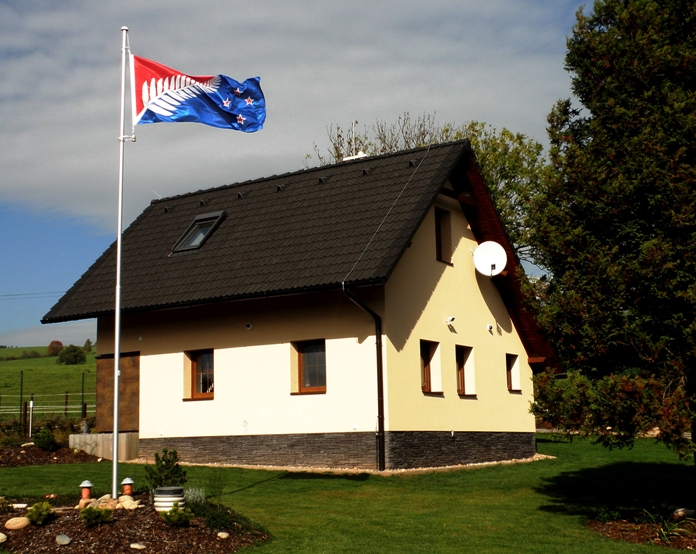 The Silver Fern Flag flying at New Zealand Point, Czech Republic We got a message from Helena who lives in Hradec Králové (Translation Queenstown) in the Czech Republic.
She sent us a photo of their Silver Fern flag flying proudly over their holiday cottage named New Zealand Point in a place named Mlade Buky (young beechs) Helena said "Dear Kyle, Thank you very much, the flag is here. It's great! Have a look!" The cottage is situated in the peaceful Krkonose mountains, about 120 kms from the beautiful Czech capital, Prague. The cottage is also available to rent, contact Helena at info@medsport.cz 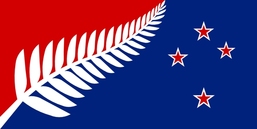 Updating our flag is a task which shouldn't be taken lightly. We believe that flag change should be done by referendum, and not forced upon us by a government. New Zealanders should vote on whether we retain the existing flag, or choose a new flag. Voting could be through a citizens initiated referendum, or one introduced by a Member of Parliament. There should be seven or eight well known designs put forward in the referendum for voting, here are some well known designs which we believe could be put forward;
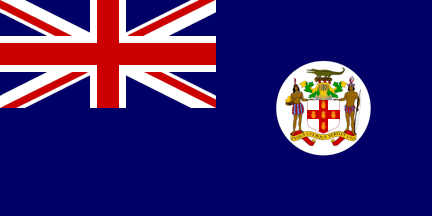
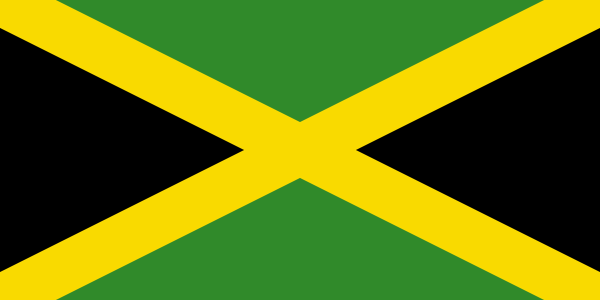
The Canadian ExperienceWhich flag says Canada to you? The 1965 flag, right? Prior to 1965 the flag on the top was the flag of Canada. Although the idea of a new design had been discussed for decades in the 1900s, it was in the 1960s that the debate intensified and became a subject of considerable controversy, After much debate new flag was officially proclaimed in 1965. The Canadian people were not given the chance to vote on the new design. Despite the preceding acrimony, the new flag was quickly embraced by the Canadian public, and internationally the flag quickly became a welcome marker of Canadians around the world. The pre-1965 flag still remains an official flag in Canada, and is sometimes flown today. The Kiwi Way - DemocraticNew Zealand can take the lead from countries like Canada and Jamaica, but we can improve on it, we believe that flag change should not be forced on the country by a government, like in the Canadian example. Kiwis should have the right to vote, to either, retain the existing ensign, or vote for a new national flag. It should be noted here that New Zealanders have never had the chance to vote for our present flag, as it was forced upon us by the British government.
We can learn from Canada too, in that once an new official flag is adopted, we can retain the existing ensign as an official flag, as some will choose to fly it. It will be like how God Save the Queen is still an official anthem of New Zealand, but today most Kiwis sing and recognise God Defend New Zealand as our anthem. What do you think? Vote above, and add your comments below! © 2012 silverfernflag.org |
MEDIAArchives
December 2022
Categories
All
|
||||||||||||||||||||||||





 RSS Feed
