
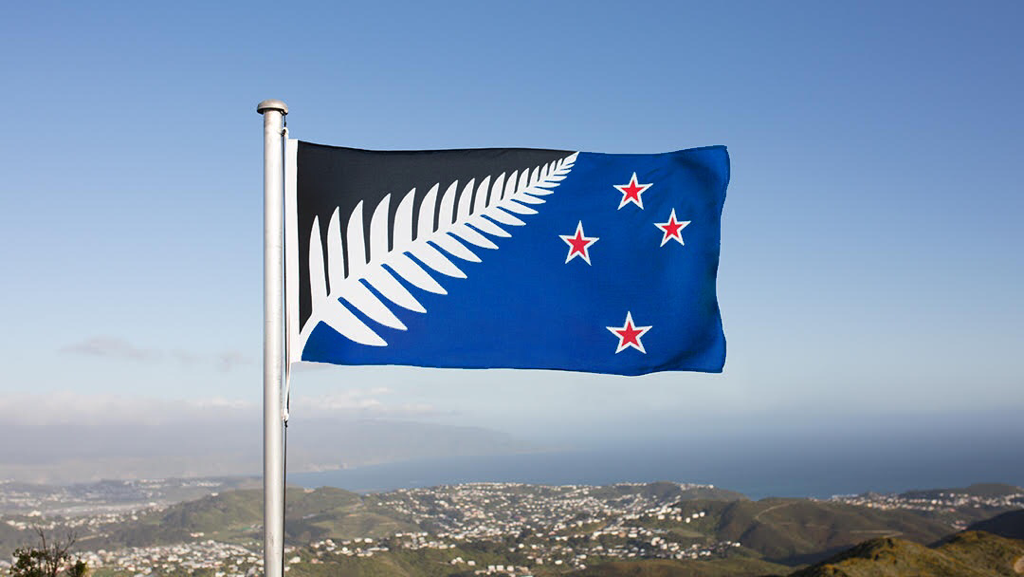
 The silver fern flag, designed by Kyle Lockwood will feature at the V&A Gallery (Victoria & Albert Museum) in London.
This is one of the world’s top galleries and we are very excited that our Silver Fern Flag will be proudly on display. This major exhibition is well worth a visit if you are in London between Saturday 12 May 2018 and the 4th of November 2018. This exhibition will display emerging technologies, the ways in which they will affect our lives in the near future, and what choices we have – as citizens – to influence their development. The world of tomorrow is shaped by the designs and technologies emerging today. From smart appliances to satellites, this exhibition brings together more than 100 objects either newly released or in development that point towards where society might be headed. Although some may seem straight out of science fiction, they are all real, produced by research labs, universities, designers' studios, governments and corporations. Guided by ethical and speculative questions, we invite you to step into four scenarios – self, public, planet and afterlife – each evoking increasing scales of technological impact. How might these objects affect the way you live, learn and even love? The undeniable physical reality of these objects may give the impression that the future is already fixed. But new things contain unpredictable potentials and possibilities, often unanticipated even by their creators. It is up to us – as individuals, as citizens and even as a species – to determine what happens next. While the objects here suggest a certain future, it is not yet determined. The future we get is up to us. The future starts here. 1. Self What makes us human? We can now design life itself. Our bodies, and even our internal biological systems, are becoming sites of design. Wearable technologies and personal trackers have become standard objects of our everyday. We measure our heart rate when we go jogging, and navigate cities with the help of GPS. As we extend our cognitive and biological capacities through machines, distinctions between what is human and what is technological blur. Once synonymous with privacy and reclusion, the home is now a broadcasting station from which we share our lives through social media. We are now all connected, but are we still lonely? 2. Public Are cities still for everyone? This section explores the public realms of cities, politics and networks, the places where we come together to collectively make decisions. People get together to crowdfund everything from bicycles to bridges, or to leak governmental secrets and generate new currencies. In face of this, Does democracy still work? The future of public and civic spaces lies between two competing forces: the top-down strategies of an increasingly small number of companies and governments, and the bottom-up tactics of an increasingly large number of people. Which will thrive? 3. Planet Should the planet be a design project? Human activity has altered our planet to the extent that some scientists have declared a new geological epoch, the 'Anthropocene', or 'age of humans'. Now that we know our behaviour has unintentionally designed the Earth, can we use technology to reverse the effects? Some designers are working on possible solutions to clean, repair or give back to the planet. Others are looking beyond the Earth for solutions in the stars – designing satellites that scope asteroids for mining new geological resources, and solutions for inhabiting Mars. But if Mars is the answer, what is the question? Can we still save our planet or shall we leave? 4. Afterlife Who wants to live forever? Current advancements in biotechnology and artificial intelligence have the potential to redefine our conceptions of what life is. Reawakening after death or uploading one's mind onto a computer are ideas that may sound like science fiction but are taken seriously by some futurists today. Against these efforts to preserve the self, institutions such as the Long Now Foundation or the Svalbard Global Seed Vault are working to preserve humanity through books, seeds and material culture. What do we want to preserve for the future – the individual or the collective? See more, and to book visit; https://www.vam.ac.uk/articles/about-the-future-starts-here-exhibition
0 Comments
Our silver fern design will feature in a tribute to the ANZACs, The Silver Fern has been used as a distinctive marker of New Zealand troops since the 19th century. 25 April 2017 marks the anniversary of the Australian and New Zealand Army Corps landings on the Gallipoli Peninsula. On this important day, millions of Australians and New Zealanders will honour their fallen in commemorations worldwide. 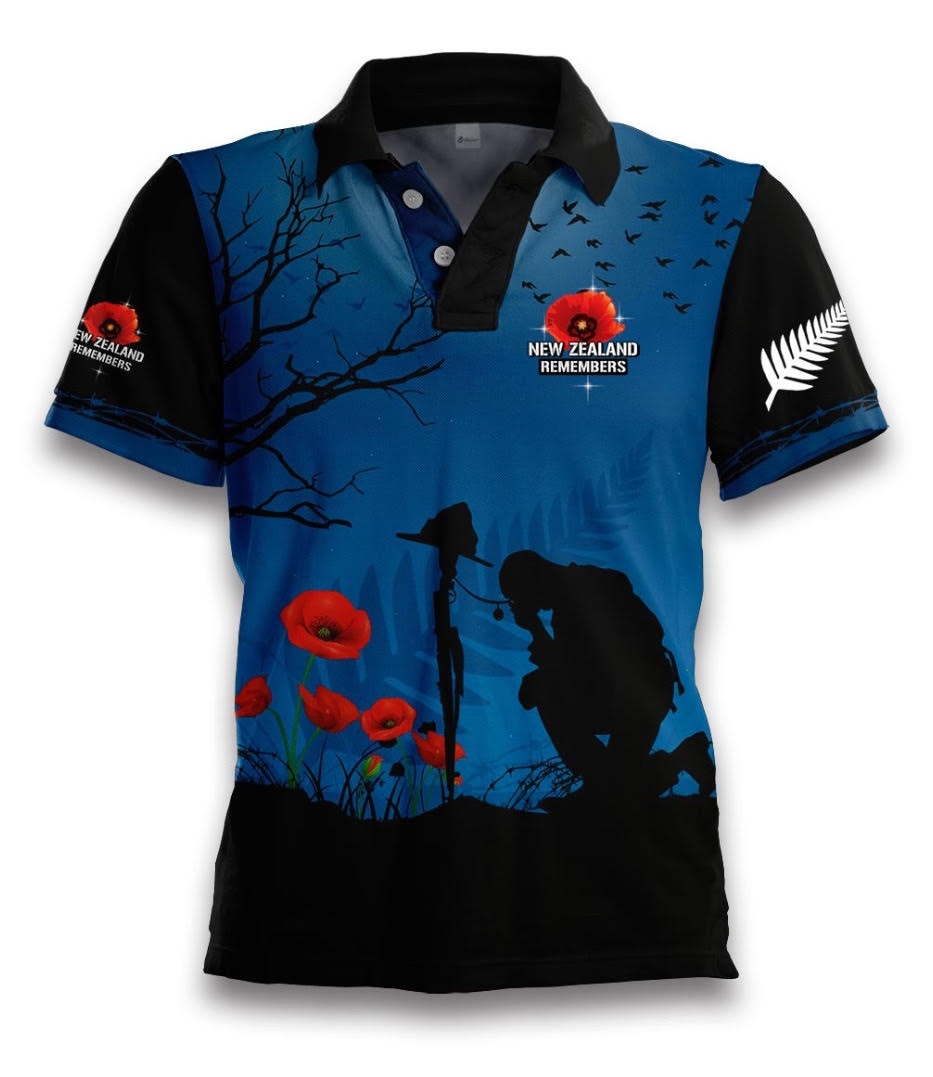 Lifewear approached us for a licence to use our fern design on their shirts, and we are proud to be part of their commemorative ANZAC shirts. This fully printed polo is a tribute to all men and women who served New Zealand. It is of a respectful style with traditional fold-over collar, A timeless profile and modern generous fit. This polo keeps the wearer cool and dry, and the lightweight AirCool fabric offers sun protection and creates a soft mesh-like feel that ensures breathability. The shirts are available at Lifewear 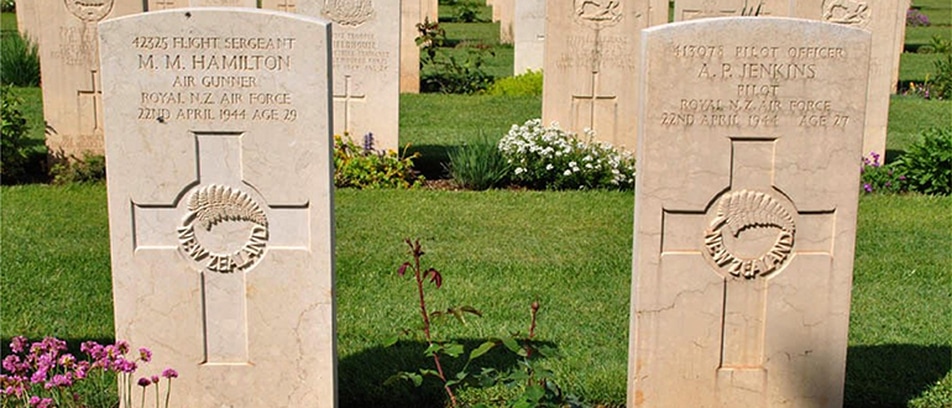 We honour those who made the ultimate sacrifice, now in far-off fields, their final resting places marked by the Silver Fern.
LEST WE FORGET 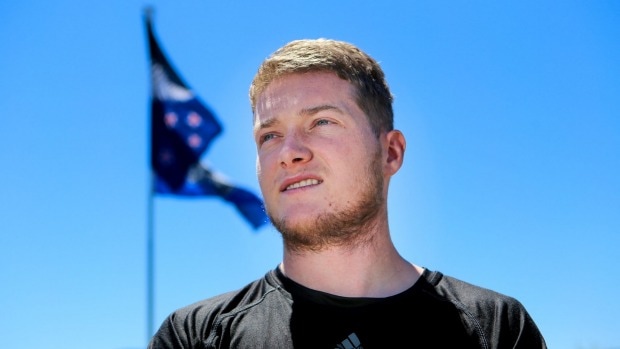 San Jose Earthquakes and All Whites defender Kip Colvey is back home in Linkwater, the Marlborough Sounds. From the Marlborough Sounds to Major League Soccer, 2016 will go down as the year Kip Colvey stepped up to the big time, achieving his lifelong dream of becoming a professional football player. Phillip Rollo reports. After snaking through the initial bends on Queen Charlotte Drive at the foot of the Marlborough Sounds, you eventually arrive at a house peering over the glistening water with two giant flags waving in the wind and a letterbox with a Porsche painted on it. One of those flags is the Kyle Lockwood silver fern design, the alternate to the current New Zealand flag. The other is that of the San Jose Earthquakes, the Major League Soccer franchise. It's the tell tale sign that this is the home of Kip Colvey, Linkwater's professional footballer. Colvey introduces his family, starting with his mother Sue, then sister Kendall and finishes with "Kip senior", his father. Kip senior restores classic Porsches from a workshop at their home, which is just short drive from Havelock. Family has played an important part in Colvey's young career, supporting him from the early days when he shifted to Nelson to attend Nelson College before moving further south to Christchurch to join the Asia Pacific Football Academy. It seems every step he took, even as a teenager, was a step towards becoming a professional football player. "There was always a vision to move on and keep moving up, but I guess it was lucky how it all happened and having good people throughout my youth career looking after me because it all worked out in the end," he said. Colvey's family are extremely proud of what he achieved this year. The two shrines, one with his All Whites playing jersey and one with his Quakes playing jersey, perched in the lounge are evidence of that. So is the flag. The Colvey family frequently travel to watch the 22-year-old play abroad and family holidays always revolve around a game of football. That tradition started when he was a student playing for California Polytechnic State University, more commonly known as Cal Poly. Their latest trip, to the small village of Kone in New Caledonia, was to watch him represent New Zealand in a World Cup qualifier. They drove for three hours to get there from Noumea and sat in the stands alongside just a few hundred spectators. "We had booked the tickets way in advance because they were a lot cheaper ... we said we'd go and if Kip makes the squad then great, but if not we'd go and support the team anyway," Sue said. "It just worked out that Kip was in the squad." Their next trip is pencilled for Fiji in the next World Cup qualifiers, although they may decide against going as they are saving for the Confederations Cup in Russia. "We would definitely want to go to Russia so we'll have to look at the finances." Drawn against Portugal, Mexico and hosts, if Colvey is selected it will be the biggest tournament he has played at. He could be marking Cristiano Ronaldo. "It'll be fun," Colvey said with a smirk. "It's a goal of any player to play in a tournament like that, so I just have to stay healthy, put my best foot forward and I'll be there." The idea that he could play against the world's best player, proven by Ronaldo's fourth Ballon D'or, is something of fairytale for most New Zealanders. But it's entirely possible for a youngster who is already living a dream few players will ever experience. Colvey said he was "crying inside" when he was offered his first professional contract by the Quakes at the beginning of 2016, a team coached by former United States national team member Dominic Kinnear. He wanted to "play it off cool" and act like the contract was expected. The reality was actually the opposite, and the emotion was one of relief after fighting his way through pre-season to get his hands on the carrot that had been dangled in front of him. "I was fighting back the tears because it was a long time coming. It was probably one of the better moments of my life," he said. "I always thought if I kept working hard that people would notice but it's lucky that it worked out the way it did. I know a lot of kids that haven't got drafted and had to go through other ways. A few of my friends had to go through the USL and work their way through the ranks." Colvey said he dashed back to the hotel to call his family and deliver the good news. "I knew they were on edge too. It was a cool moment." Colvey was selected at No 49 in the MLS SuperDraft. Kinnear saw potential in the defender, who is capable of playing at left-back or right-back and picked him in the third round. However, players selected that deep are very rarely signed. Being drafted is effectively being placed on trial so the joy was tempered somewhat. Colvey said they call players in that position "camp fodder." "You're there to get minutes until the starters get fit and then they're playing 90 minutes in the last game and you're out, so going in it was just great to be in pre-season camp, get in that environment and see what I could do. "I kind of knew where I was standing and I knew the team needed a fullback, so that was the only real positive I could to cling on to." Colvey said the pre-season involved plenty of games, which gave him ample opportunity to showcase his talents. Eventually D-Day arrived, when the final contracts had to be signed. Colvey said was "bittersweet." "There was a group of us that got drafted together, spent a month in the hotel, and some of them got let go. It was exciting for me but it was pretty cut-throat." In his rookie year, Colvey wasn't sure when, or even if, he would make his debut. It turns out that first chance came on the opening day of the season. He was brought on against the Colorado Rapids. It was halftime. "We were out there having a kick around, having fun, as you do as a sub, and then 10 minutes into the break and the goalie coach came over and said 'there's a chance you might go on, you should probably get ready.' "I thought maybe one of the guys was feeling tight a little bit but I figured he'd probably just stay on for 10 minutes, and in my mind I thought it probably wasn't serious." Two minutes later another member of the coaching staff came over and told Colvey the instructions for defending and attacking set-piece plays. "So I was like 'oh, so I'm going in for sure?'" Colvey threw on the blue and black Adidas playing jersey and ran out with the team for the second half. San Jose scored just five minutes later, which eased his nerves, and they went on to win the game 1-0. "I was happy with the way it worked out. I was in a bit of rhythm. Going through pre-season you play all those games and if I had to wait before I played my first MLS game I would've been out of rhythm and a little bit shook." Colvey started the next two games at left-back, facing the Portland Timbers and the star-studded LA Galaxy, who visited New Zealand twice when David Beckham was on their roster. Colvey would play against the Timbers once more, his debut season ending with four appearances and a total of just 315 minutes of game time. He said it was frustrating waiting for further opportunities that never came, loaned out to San Jose's feeder side Sacramento Republic, who compete in the second-tier USL competition, at various stages throughout the season in order to get game time. "It was a week to week thing. If they wanted me I'd go on the weekend, like Thursday, but then I'd be back for training on Monday. "It's not like a six-month deal like it is in Europe and it's just a short drive." A regular day with San Jose will see Colvey and his team-mates arrive at training well before the scheduled 9am start. "You gotta be ready or you get found out," he said, hence the early arrival. He will start by jumping in the hot tub, have some food and will warm up by working out in the gymnasium. "Then we meet at 10am in the locker room, the coach will say a few words about the game, show some film, and if it's closer to another game we'll go over the other team, work out our strategy and then go over training." Then training, which lasts anywhere between 90 minutes and two hours, begins. "It's not too stressful. Earlier in the week they're harder then it tapers off like you'd expect." There's a lunch provided after practice and players recover in ice baths or spend more time in the gym before heading home. Colvey's contract is worth US$51,499.90, around NZ$72,000. He is one of the lowest-paid players in the league but that is expected considering his rookie status and the fact he came via the draft. He isn't the first New Zealander to play in the MLS and he shouldn't be the last either. Ryan Nelsen and Simon Elliott are two of the most well known All Whites to ply their trade there while others in recent years include Tony Lochhead, Dan Keat, Andrew Boyens, Michael Boxall and Jeremy Brockie. Jake Gleeson is the No 1 goalkeeper for the Portland Timbers and is the only other Kiwi that featured during the 2016 season. A former under-17 and under-23 representative, Colvey said making his full international debut for the All Whites against Fiji in their Nations Cup opener was "right up there" with the best moments of his life, of which he's had plenty in 2016. "I've played for the youth teams but just being in the full team environment, walking out and hearing the national anthem, you're representing your country at the highest level so there's no better feeling." New Zealand went on to win the Nations Cup, but it wasn't easy going, stuttering to a penalty shootout win over the hosts, Papua New Guinea. "It's very tough to play there," he said. "It's not just because of the conditions or whatever. It's just a long time to be in a hotel, people get frustrated, you're doing the same routines every day ... the pitch is terrible, the fans are against you, and there's the heat." The Nations Cup carried significant importance for New Zealand Football especially as a place at the lucrative Confederations Cup was on the line. Colvey said the players were aware that it was a win at all costs tournament. "We knew what was at stake. We talked quite a bit as a team at night before the games about what we needed to do and that we needed to perform and there were players with injuries [that were unavailable] so we were fighting for them too. "We knew if we won we'd get better games against higher-ranked opposition, which we saw against the US and Mexico, and because we were looking at the World Cup, that's our goal, so we knew the better competition would be crucial for us to prepare for that South American side." The game against the United States against Robert F. Kennedy Memorial Stadium in Washington DC was a moment Colvey really cherished. After all, he was born in Hawaii, speaks with an American accent and has lived in the country for the past five years. His San Jose team-mate, goalkeeper David Bingham, was a second half substitute. Although there wasn't any pre-game banter between the pair, he said Bingham was "pretty pissed" with the result as New Zealand secured a memorable 1-1 draw. "There's a lot of hype around that team when they play, especially in the States, and in RFK Stadium in DC. There was a lot of media attention on them so it was fun to play against them. "It was definitely a bad result for them because they got slated." The game followed on from New Zealand's 2-1 loss to Mexico, that particular international window seen as a major turning point in coach Anthony Hudson's tenure after suffering a few scares against much weaker competition at the Nations Cup and only narrowly going on to win. "We had always thought what we were doing with Anthony would work no matter who we played but there always the question of what would happen when we came up against someone that can play. "I guess the Mexico game was the point where, although we lost, we were really close to turning them over and we followed that up with the US game so we knew we could play with these people and the philosophy we have been working on for the past two years is coming together and we are just about ready." Colvey has recently signed an extension with Quakes, keeping him in the United States for at least one more season. He said he had his fingers crossed that he would be re-signed, although it was only in the past few weeks that the offer finally came his way. "When you've been in and out of the squad you never know, and you never know what's going on behind the scenes. "But I'm happy they picked up my option. I'll be back next year and I'm looking forward to it." Colvey is aware that there will be increased expectation in season two. But that's fine by him as his aim is "step it up" and break into the starting 11 on a regular basis, knowing he needs to be playing frequently for his club to continue getting opportunities with the All Whites in an important year. "I'm not a rookie anymore." Colvey will head back to California in early January, but for now he's just relaxing at home in the Marlborough Sounds, spending the next week "just laying down." "It's gorgeous. We're lucky to be here." - Stuff 
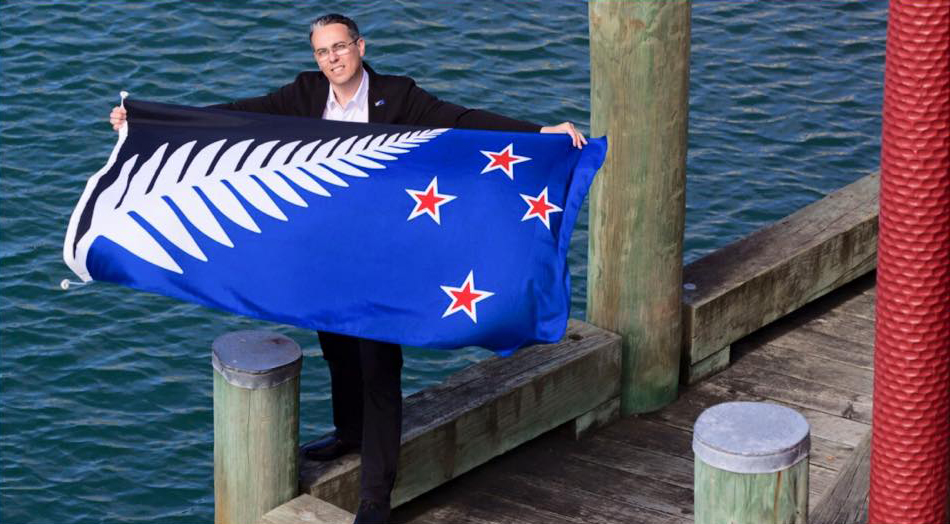 Thank you to all 921,786 voters who chose the Silver Fern flag.
To design a flag is no mean feat – when I first did this many years ago, I didn’t imagine the day would come where it would be selected from over 10,000 designs and I would see it fly from baches, beaches, boats and buildings all over New Zealand. I am incredibly humbled by that. I am proud to be a Kiwi and thrilled to have cast my own vote in a world-first referendum process. Along the way there’s been robust and deeply passionate discussions – I remember a headline when the four alternatives were first announced “Four alternative flags, four million opinions” and that sums it up really! Irrespective of the result, nearly 1 million of you have loved the Silver Fern and I hope that you will continue to fly it. I myself will continue to wear the Silver Fern flag wherever I go, and of course I’ll be just as proud to march behind the official New Zealand flag this coming ANZAC day as I have done since 1996 when I was a volunteer in the NZ Army. Kyle Lockwood DipDArch DipArchTech MNZIOB Designer Silver Fern flag
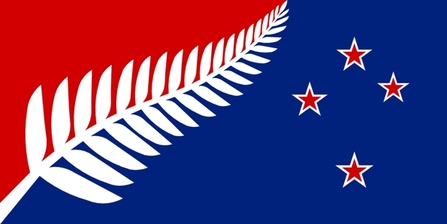
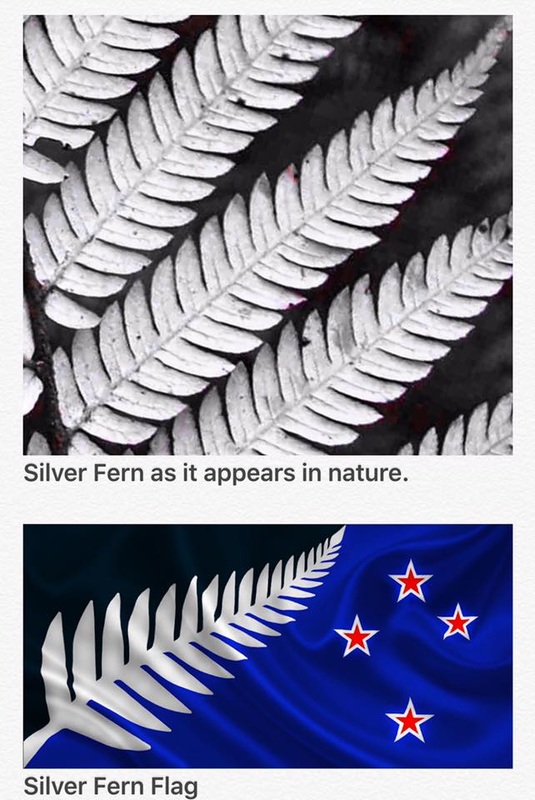
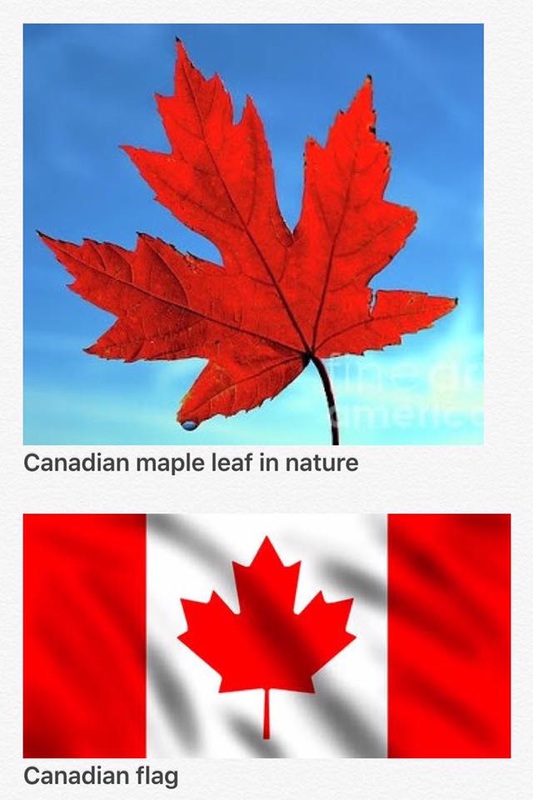
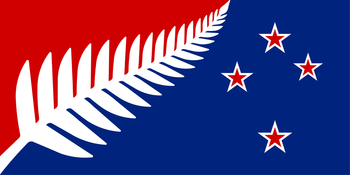
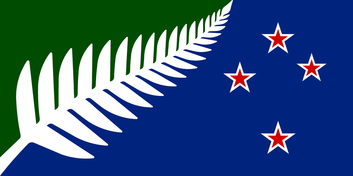
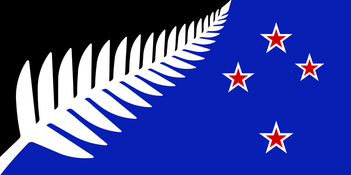
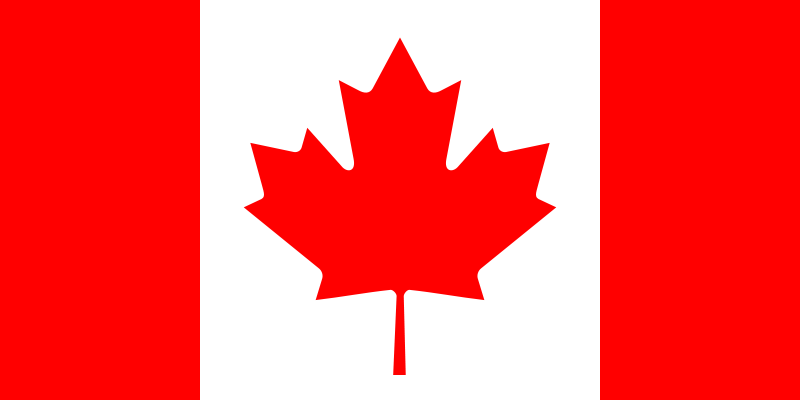
There's been a few questions lately about the appearance of the fern on the Silver Fern Flag. It was decided early in the design phase to stylise the silver fern on the flag, just as the Canadian flag has a stylised maple leaf, the reason for stylisation is so the fern-leaf on the flag looks right when it's aloft in the breeze. We've also been asked why isn't the fern silver? In flag design convention, there are 5 official colours and 2 official metals, design rules stipulate that a colour must be separated by a metal. Silver is represented in white just as gold is represented in yellow, have a look at the graphic below; 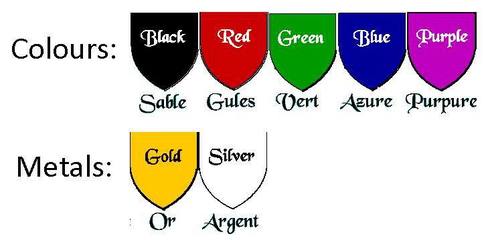
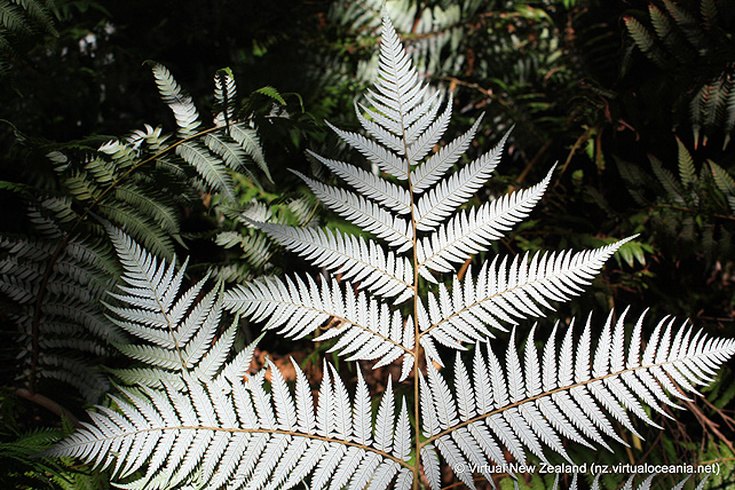 NZ FLAG FACT NUMBER 51
The silver fern (Cyathea dealbata), called ponga by Māori, is endemic to New Zealand. Māori used native flora to navigate their way home through the forests at night. They would break-off several fronds of the silver fern and leave them silver side up so that the moonlight would reflect off them. This night-time trail served as a homing beacon. Over the years, deer cullers and possum hunters have also used the fern for this purpose. Māori also have a whakatuakī (proverb) that is closely associated with the silver fern: Mate atu he tetekura, Ara mai he tetekura. As one chief dies, another rises to take their place. When said in the context of the silver fern, the translation becomes: As one frond withers and dies, another rises to take its place. He tete, or frond, stands for a chief. Sir Tipene O’Regan of Ngāi Tahu once reminded author and academic Dr Danny Keenan (Ngāti Te Whiti Ahi Kā, Te Ātiawa) that ‘to Māori, the silver fern denotes strength, stubborn resistance, and enduring power, encapsulated in a natural form of native elegance. Māori have always honoured the fern, giving it a pride of place. From New Zealand Flag Facts by historian Malcolm Mulholland. Read more at: http://www.silverfernflag.org/press/new-zealand-flag-facts-book 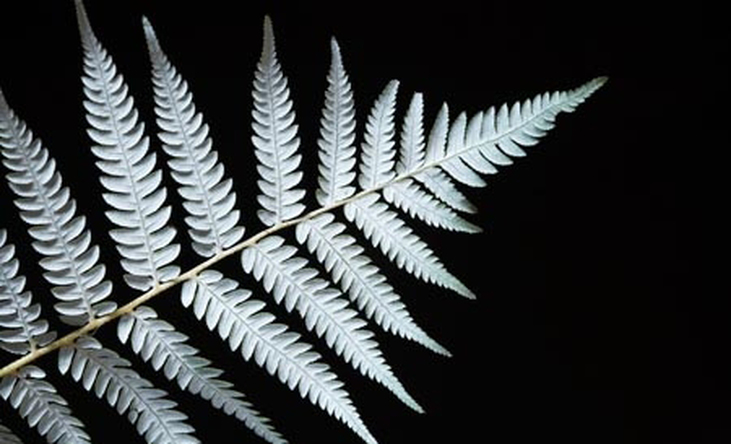 NZ FLAG FACT NUMBER 52
In 1853, while the HMS Sparrow was berthed in New Plymouth, sailors with the Royal Navy challenged the local army garrison to a match involving rifle shooting. The event took place at Rewa Rewa Rifle Range, and just before it began, the New Zealand shooters spotted some silver fern, picked it, and pinned the leaves to their pockets as a good luck charm. The charm brought success, as the army garrison won the competition. Its members apparently said: ‘The silver fern has brought us luck and we will carry on using it. During the nineteenth century, the silver fern was also used in verse and paintings by famed watercolourist, Alfred Sharpe. Sharpe, regarded as one of the pioneer artists of New Zealand, prolific and successful, producing around 150 watercolours depicting the New Zealand landscape from the 1860s to the 1880s, also wrote poetry. One of his poems, titled A Night in the Forest, contained these lines: A silver fern outspreading, In mass of lace like threading, Throughout its frondings wide, Faint phosphorescence showers, On the kie kie flowers, from its silv’ry underside. From New Zealand Flag Facts by historian Malcolm Mulholland. Read more at: http://www.silverfernflag.org/press/new-zealand-flag-facts-book
NZ FLAG FACT NUMBER 54
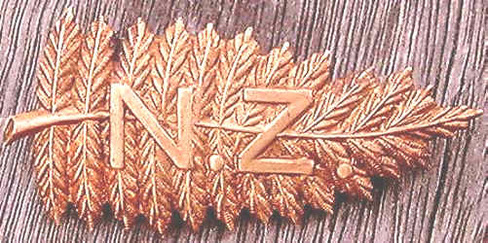
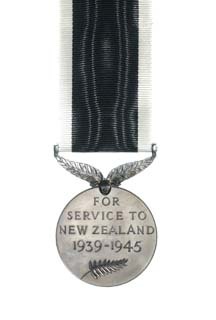
During the Boer (South African) War at the turn of the twentieth century, the silver fern appeared on the Glengarry (cap) and slouch hat badges of soldiers from New Zealand. The New Zealand Natives Association wanted to differentiate New Zealand troops from the soldiers of other British colonies and so produced 200 silver fern badges for the hats of the men shipped to South Africa in 1899. The association was essentially interested in forging a unique New Zealand identity rather than having men from New Zealand seen as Britons living afar. Some New Zealand soldiers in World War I referred to themselves as ‘Fernleafs’ (New Zealand having been labelled as ‘Fernland’ and New Zealanders as ‘Fernlanders’ at the start of the 1900s). In World War II, Lowndes Square in Knightsbridge, London, hosted a ‘Fernleaf Club’, a residential centre for the rehabilitation of troops, staffed by the New Zealand Women’s Army Auxiliary Corps. All World War II New Zealand soldiers wore the badge called ‘Onward’. This ‘universal badge of the 2 NZEF was introduced in October 1939: the letters ‘NZ’ surrounded by fern fronds and surmounted by the King’s Crown, all above a scroll bearing the word ‘Onward’. Hat and collar versions were worn on SD uniforms by all ranks …This was supposed to be the only badge worn, although this … [was] not strictly adhered to’. The official address for the New Zealand Division Headquarters in Egypt in World War II was ‘Fernleaf Cairo’, and the New Zealand War Service Medal has the silver fern on the back. The silver fern also adorns the headstones of New Zealanders in the cemeteries of the Commonwealth War Graves Commission throughout the world, thereby perpetuating the association between the military and the silver fern. From New Zealand Flag Facts by historian Malcolm Mulholland. Read more at: http://www.silverfernflag.org/press/new-zealand-flag-facts-book 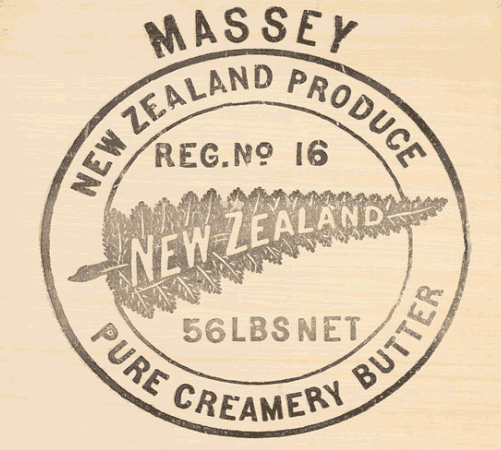 NZ FLAG FACT NUMBER 55
The silver fern has long been closely associated with New Zealand produce because of its use as a trademark for the country’s meat and dairy exports. After the success of the 1924/25 All Blacks Invincibles Tour, Tour Manager Stan Dean suggested ‘that the fern leaf be adopted as a national trade mark for New Zealand goods in the same way Canada has adopted the maple leaf.’ The National Dairy Association immediately took up Dean’s idea. Dean clearly considered that the fern should stamp all New Zealand-made products leaving the country’s shores. As he pointed out, the fern had been recognised in Britain since its use as an emblem during the rugby tours of that country by the Natives in 1888, the Originals in 1905, and the Invincibles in 1924. The silver fern was also used on New Zealand-produced tobacco products, and it gave its name to the train that travelled on the North Island main trunk line between Wellington and Auckland from 1972 to 1991 (the Silver Fern railcar). More recently, in the 1990s, New Zealand Trade and Enterprise and Tourism New Zealand developed the silver fern into the distinctive New Zealand FernMark. These organisations created the mark in order ‘to establish a singular visual identity for New Zealand’. Those businesses that carry the FernMark are the ambassadors of New Zealand’s efforts to promote New Zealand products and trade overseas. From New Zealand Flag Facts by historian Malcolm Mulholland. Read more at: http://www.silverfernflag.org/press/new-zealand-flag-facts-book
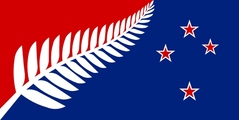 We've written to the Prime Minister and the Leader of the Opposition as they would both like to see a silver fern appear on New Zealand's national flag. Our letter to the prime minister can be viewed below. We'll keep you posted as to his response. 
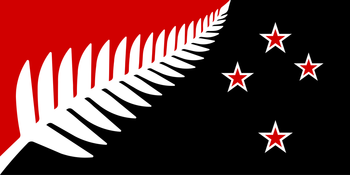
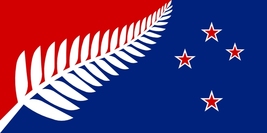
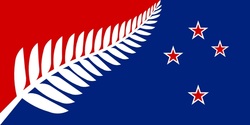 Please Share! silverfernflag.co.nz Newstalk ZB Media Statement. Hello Chris, thank you for approaching me and asking about a flag I designed for New Zealand. The flag was designed when I was a Massey University student in 2000, features a bold silver fern on the left hand side, and the Southern Cross to the right, the colours honour the red, white and blue colours seen on the present flag. If you are near a computer or a smart phone, the design can be viewed at www.silverfernflag.co.nz. A stylised Silver Fern, a New Zealand icon for well over 100 years, has been worn proudly by many generations of New Zealanders, from sports people, to firefighters and military personnel, The Silver Fern is an element of indigenous flora representing the growth of our nation. The multiple points of the fern leaf represents Aotearoa's peaceful multicultural society, a single fern leaf spreading upwards represents that we are all New Zealanders - one people - growing onward into the future. The Southern Cross, is a defining element in the present New Zealand Flag, it represents our geographic location in the antipodes. The Southern Cross is visible throughout the year in the southern night skies. It has been used as a navigational aid for centuries and it helped guide early settlers to our islands. Each star is also representative of the major island groups of New Zealand - North Island, South Island, Stewart Island, and the Chatham Islands. Red, is a significant colour to the NZ Maori, Red also represents the sacrifice made by all New Zealanders during wartime. White represents Aotearoa, Land of the Long White Cloud, The official Maori name for New Zealand. The colour also represents peace. Blue represents aumoana or the ocean that surrounds our island nation, over which all New Zealanders, or their ancestors, crossed to get to New Zealand. Rugby is not credited with the first wearing of the silver fern, according to Nelson historian Alan Turley. He said that while records were scant, an historic magazine cutting given to him by rugby commentator Keith Quinn, showed the fern being worn in a shooting, not rugby, match between New Plymouth's army garrison and the visiting Royal Navy. It was 1853, and the Royal Navy ship HMS Sparrow was anchored offshore in a visit to the fledgling town. While onshore, the navy men challenged the local army lads to a rifle shooting match at the Rewarewa rifle range. According to the clipping, the army men decided to pick silver fern tips growing near the range and pin them to their uniform shirt pockets as a sort of good luck talisman. The team won the shooting match and thereafter considered the fern a good-luck symbol, and so the tradition of the silver fern began. I appreciate that people fought wars under our present union-jack based flag, but what is lesser known is that soldiers, who made the ultimate sacrifice for New Zealand, lie buried in foreign fields beneath headstones bearing not the Union Jack, but the Silver Fern. Also the badges of many NZ army regiments feature the silver fern. Our Canadian commonwealth brothers-in-arms also had troops who fought under a British Red Ensign based flag, but in 1965 they changed their flag to the distinctive Maple Leaf Flag which we today associate with all things Canadian, however on remembrance days, the old flag is sometimes brought out and displayed too. If New Zealand changes its flag in the future I hope that on ANZAC and remembrance days we could honour our past soldiers in the same way as the Canadians do today. Both the Prime Minister and the Leader of the Opposition, are supporters of the Silver Fern. The fern is our icon, it's not just about the All-Blacks, it was on our one cent coins, it is now on our $1 coins too, and it features on our banknotes. It's been on our coat of arms since 1956, and lately it has become the official symbol of the NZ government abroad. It's now being painted on Air New Zealand's aircraft, and like Canada's maple leaf, the fern is a powerful symbol that says 'New Zealand'. It even features strongly on our passports. Speaking of passports I'm presently spokesman for a group called nzten.com, we are advocating for the return of ten year NZ passports. Amongst our 11,000 supporters are a few Knights and Dames, and the Hon Phil Goff. I believe that one day New Zealand will choose a new flag, the present flag suggests we are a subservient colony of the United Kingdom, not the proud independent nation of New Zealand that we have been, since the passing of the Statute of Westminster Adoption Act in 1947. I believe my design honours our past, but also looks forward to our future. Flag change could be 25 years away, but I hope that whichever design is chosen, it is done democratically, and that design chosen represents all New Zealanders. Kyle Lockwood. Melbourne, 12th August 2013. ENDS Chris Lynch <[email protected]> 11 August 2013.
Hi there, Kyle I host NewstalkZB's Canterbury Mornings programme (on New Zealand's second biggest radio market) We are discussing "changing the New Zealand flag" on the programme tomorrow Monday. We're on 100.1FM and streaming live at NewstalkZB.co.nz. I'm keen to get people's input on this issue and welcoming calls in from the public on (03) 340 10 98 or toll-free (inside the Canterbury region) on 0800 80 10 80. Talkback starts at 8.40AM. You're more than welcome to call in and please spread the word!! Best Wishes, Chris Lynch Chris Lynch Host Canterbury Mornings with Chris Lynch E: [email protected] W: newstalkzb.co.nz F: facebook.com/canterburymornings F: facebook.com/lynchinnz T: lynchonzb 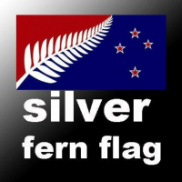 Our silver fern flag featured in the NZ Herald yesterday. (Albeit the prototype version) A bill on the status of the NZ flag is expected to be drawn by parliament in the near future. Check out the article here at http://m.nzherald.co.nz/nz/news/article.cfm?c_id=1&objectid=10863680
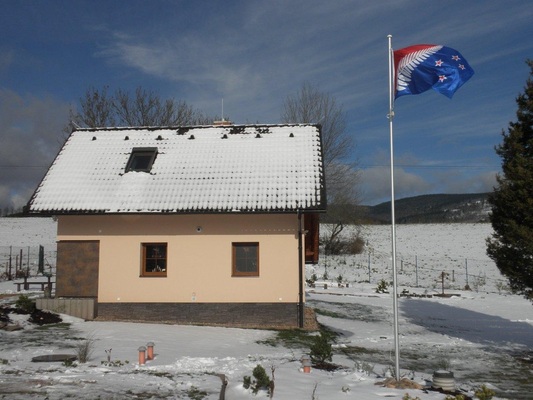 Whilst we in the southern hemisphere are looking forward to warm beachy summers, the first snows are falling in the Czech Republic....
"We love your flag, white, blue and red are also our Czech flag colours too. Best regards, Helena" 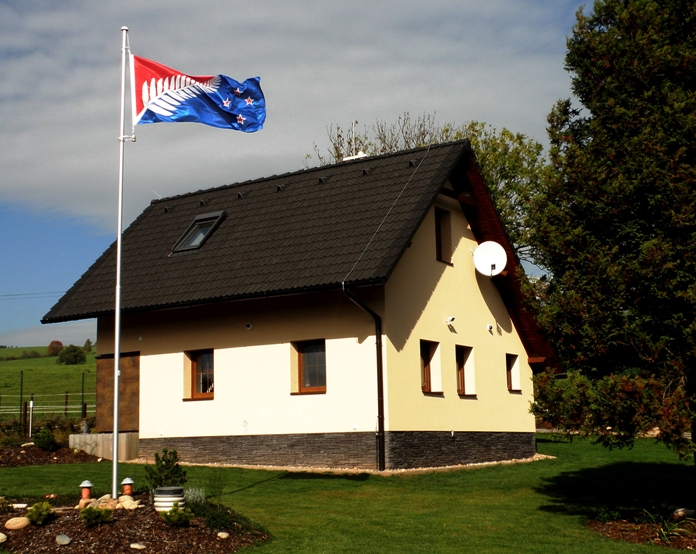 The Silver Fern Flag flying at New Zealand Point, Czech Republic We got a message from Helena who lives in Hradec Králové (Translation Queenstown) in the Czech Republic.
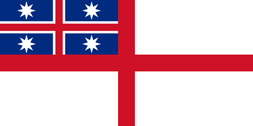
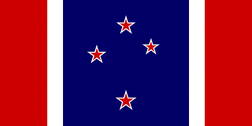
She sent us a photo of their Silver Fern flag flying proudly over their holiday cottage named New Zealand Point in a place named Mlade Buky (young beechs) Helena said "Dear Kyle, Thank you very much, the flag is here. It's great! Have a look!" The cottage is situated in the peaceful Krkonose mountains, about 120 kms from the beautiful Czech capital, Prague. The cottage is also available to rent, contact Helena at info@medsport.cz 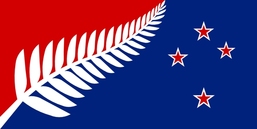 Updating our flag is a task which shouldn't be taken lightly. We believe that flag change should be done by referendum, and not forced upon us by a government. New Zealanders should vote on whether we retain the existing flag, or choose a new flag. Voting could be through a citizens initiated referendum, or one introduced by a Member of Parliament. There should be seven or eight well known designs put forward in the referendum for voting, here are some well known designs which we believe could be put forward;
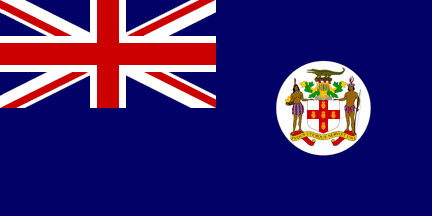
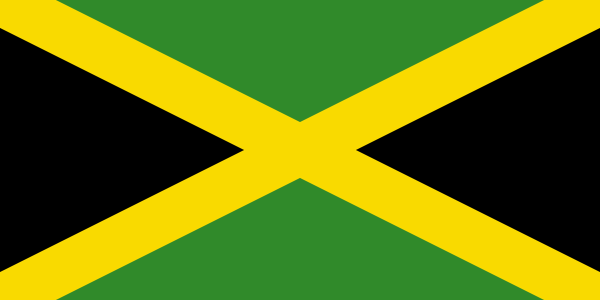
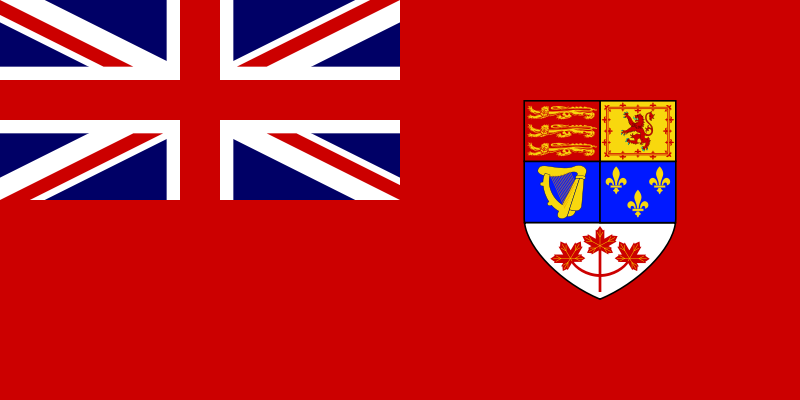
The Canadian ExperienceWhich flag says Canada to you? The 1965 flag, right? Prior to 1965 the flag on the top was the flag of Canada. Although the idea of a new design had been discussed for decades in the 1900s, it was in the 1960s that the debate intensified and became a subject of considerable controversy, After much debate new flag was officially proclaimed in 1965. The Canadian people were not given the chance to vote on the new design. Despite the preceding acrimony, the new flag was quickly embraced by the Canadian public, and internationally the flag quickly became a welcome marker of Canadians around the world. The pre-1965 flag still remains an official flag in Canada, and is sometimes flown today. The Kiwi Way - DemocraticNew Zealand can take the lead from countries like Canada and Jamaica, but we can improve on it, we believe that flag change should not be forced on the country by a government, like in the Canadian example. Kiwis should have the right to vote, to either, retain the existing ensign, or vote for a new national flag. It should be noted here that New Zealanders have never had the chance to vote for our present flag, as it was forced upon us by the British government.
We can learn from Canada too, in that once an new official flag is adopted, we can retain the existing ensign as an official flag, as some will choose to fly it. It will be like how God Save the Queen is still an official anthem of New Zealand, but today most Kiwis sing and recognise God Defend New Zealand as our anthem. What do you think? Vote above, and add your comments below! © 2012 silverfernflag.org  Christchurch, Sydney, London, Los Angeles, Pukekohe... the Silver Fern Flag represents New Zealand around the world, here's a world map showing cities and locations where, over the past decade, online customers have bought our Silver Fern Flag products. It's also good indicator of where New Zealander's abroad tend to live, although some buyers aren't Kiwi, they just happen to love New Zealand so much they fly our flag anyway! Typically the Silver Fern Flag is bought in New Zealand, Australia, and the United Kingdom, which isn't too suprizing, but perhaps the most unusual places it has been sent to are Hradec Králové, a township outside Prague in the Czech Republic, and Willemstad, Curacao, a small Dutch Carribean island off the coast of Venezuela, The Silver Fern Flag is now represented on every continent except Antartica, but perhaps some cool Kiwis at Scott Base can change that for us!? Click here to see the full map: 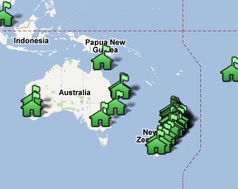
Click on map to see full version
People have asked 'How do I fold the flag properly?' which is a really good question! a Google search gives us a lot of results on folding the USA Flag, but few on how to fold a New Zealand Flag. Check out our slideshow and download our flag care .pdf here this gives you information about the significance of the Silver Fern Flag and the proper method of folding a flag, The method is actually useful for most Commonwealth of Nations countries, including folding the flags of New Zealand, Australia, Canada and the United Kingdom.
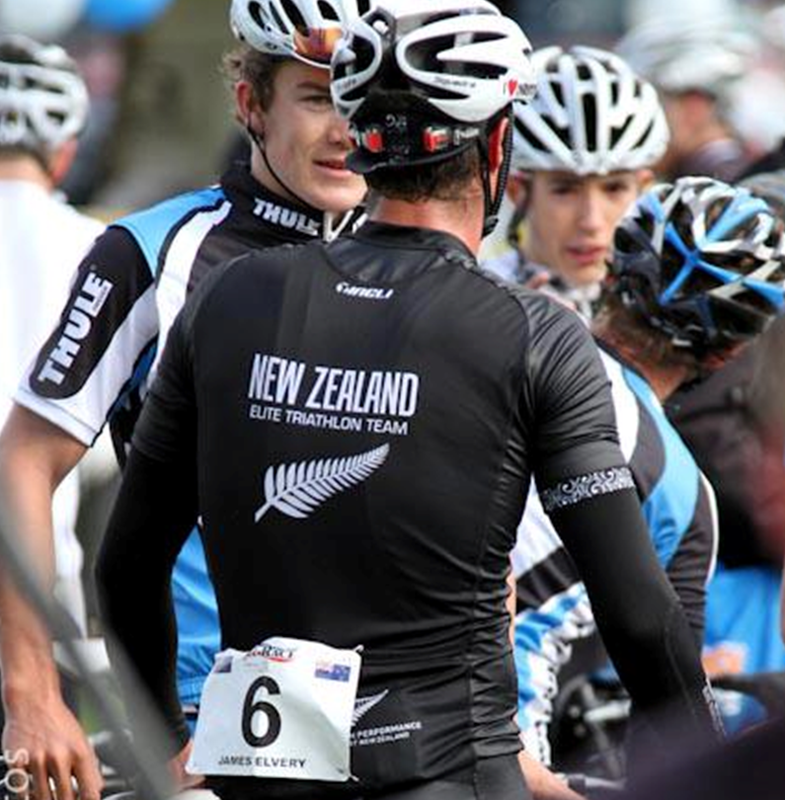
James Elvery, senior athlete from the NZ Elite Triathlon Team, has sent us some preliminary photographs of the team uniform, before they head over to Sydney next week for a race. “The uniforms came out awesome! Exactly how I wanted them to look so that has been really pleasing. Thanks very much for the use of the fern. Everyone is stoked!” said James. All the best for your race in Sydney next week, Go the silver fern! Go New Zealand! Kyle Lockwood/silverfernflag.org 
The New Zealand Elite Triathlon Team, for the 2012 Olympics, has chosen Kyle Lockwood's Silver Fern design to appear on their cycling uniform. The uniforms are presently being made up. Photographs of the athletes in uniform will be posted here once the uniforms have been distributed to the team.
Kyle Lockwood/silverfernflag.org |
MEDIAArchives
December 2022
Categories
All
|
||||||||||||||||||||||




 RSS Feed
